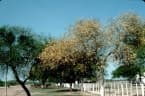
Tabebuia nodosa
Tabebuia nodosa
Safety & Hazards
None known
Botanical Description
Tabebuia nodosa is a deciduous tree with an open, vase-shaped crown; it usually grows around 5 - 8 metres tall, though can reach up to 15 metres. The bole can be 20 - 30cm in diameter, with a thick, cracked bark[ 338 Title IUCN Red List of Threatened Species Publication Author Website http://www.iucnredlist.org/ Publisher Year 0 ISBN Description A list of plants under threat and facing possible extinction, usually with brief details of the threats and information on habitat. , 420 Title Brazilian Trees. Volume 2. 4th Edition. Publication Author Lorenzi. H. Publisher Instituto Plantarum De Estudos Da Flora; Brazil. Year 2002 ISBN 85-86714-15-1 Description Information on 350 species of Brazilian trees. Stunning photographs of each species, brief details on the plant, its uses and how to grow it from seed. A superb work, with the minor irritation that the translation from Portuguese is not of the best. , 2095 Title Bignoniaceae: Part II (Tribe Tecomeae) Publication Flora Neotropica Monograph Vol. 25, No. 2 pp 1-370 Author Gentry A.H. Publisher The New York Botanical Garden, New York Year 1992 ISBN 0-89327-368-6 Description ]. The tree is sometimes harvested from the wild for local use as a medicine and source of materials. It can be used as a pioneer when restoring native woodland and has an exuberant flowering display so can be grown as an ornamental in landscaping, as a street tree etc[ 420 Title Brazilian Trees. Volume 2. 4th Edition. Publication Author Lorenzi. H. Publisher Instituto Plantarum De Estudos Da Flora; Brazil. Year 2002 ISBN 85-86714-15-1 Description Information on 350 species of Brazilian trees. Stunning photographs of each species, brief details on the plant, its uses and how to grow it from seed. A superb work, with the minor irritation that the translation from Portuguese is not of the best. ]. Tabebuia nodosa has a high population and a wide distribution, Even though its native range has been suffering high deforestation rates due to conversion of natural land into pastures, the species is not at present considered to be at threat. The plant is classified as 'Least Concern' in the IUCN Red List of Threatened Species(2021)[ 338 Title IUCN Red List of Threatened Species Publication Author Website http://www.iucnredlist.org/ Publisher Year 0 ISBN Description A list of plants under threat and facing possible extinction, usually with brief details of the threats and information on habitat. ].