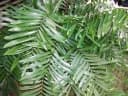
Zamia erosa
Zamia erosa
Safety & Hazards
The fleshy seeds contain a toxic glycoside that causes headaches, vomiting, stomach pains and diarrhoea if ingested[ 293 Title Poisonous Plants of North Carolina Publication Author Website http://www.ces.ncsu.edu/depts/hort/consumer/poison/poison.htm Publisher Year 0 ISBN Description An excellent concise but comprehensive guide to toxic plants that grow in N. Carolina. It lists even those plants that are of very low toxicity, including several well-known food plants such as carrots and potatoes. ]. The juice from the plant is very poisonous[ 46 Title Dictionary of Economic Plants. Publication Author Uphof. J. C. Th. Publisher Weinheim Year 1959 ISBN - Description An excellent and very comprehensive guide but it only gives very short descriptions of the uses without any details of how to utilize the plants. Not for the casual reader. ]. The starch obtained from the stem is poisonous unless thoroughly cooked[ 331 Title Flora of Guatemala Publication Author Standley P.C. & J. A. Steyermark Website http://www.archive.org/ Publisher Year 1946 - 1976 ISBN Description A superb reference, though somewhat dated. Gives lots of plant uses as well as information on plant habit and habitat. The entire flora (13 volumes) can now be downloaded from http://www.archive.org/ ].
Botanical Description
Zamia erosa is an evergreen shrub with a subterranean, tuberous stem 3 - 25cm in diameter. The stem is topped by a crown of 2 - 15 leaves that can each be up to 150cm long[ 314 Title Palm and Cycad Societies of Australia. Publication Author Website http://www.pacsoa.org.au/ Publisher Year 0 ISBN Description Contains at least a little information on the majority of palm and cycad species, plus a wealth of photographs. A first class website. , 990 Title The Cycad Pages Publication Author Website http://plantnet.rbgsyd.nsw.gov.au/PlantNet/cycad/wlist.html Publisher Royal Botanic Gardens, Sydney. Year 2012 ISBN Description A website dedicated to the various species of Cycad, with a comprehensive description of all the known species (as of 2012). At present (2015), the site is still running but is no longer being updated ]. The stems have been used in the past as a source of starch for local people. This species is very rare in the wild, and extinct in parts of its range, although it is quite common in cultivation. It has been affected by habitat destruction as a result of road building and land clearance for agricultural practices. The plant is classified as 'Vulnerable' in the IUCN Red List of Threatened Species(2011)[ 338 Title IUCN Red List of Threatened Species Publication Author Website http://www.iucnredlist.org/ Publisher Year 0 ISBN Description A list of plants under threat and facing possible extinction, usually with brief details of the threats and information on habitat. ].