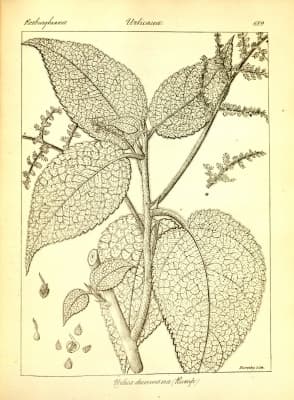
Laportea decumana
Laportea decumana
Safety & Hazards
The plant is densely armed with irritant hairs[ 310 Title Plant Resources of Southeast Asia Publication Author Website http://proseanet.org/ Publisher Year 0 ISBN Description Lots of information on the uses of the plants of SE Asia. ]. The leaves have stinging hairs, much like stinging nettles (Urtica species) to which they are related[ 407 Title BoDD (Botanical Dermatology Database) Publication Author Website http://bodd.cf.ac.uk/ Publisher Year 0 ISBN Description Brief notes on a very wide range of plants that have reports of causing harm to the skin. ].
Botanical Description
Laportea decumana is a perennial plant with stems that become more or less woody and can persist for several years. It can grow up to 2 metres tall, the well-branched stems and leaves densely armed with irritant hairs[ 310 Title Plant Resources of Southeast Asia Publication Author Website http://proseanet.org/ Publisher Year 0 ISBN Description Lots of information on the uses of the plants of SE Asia. ]. The plant is harvested from the wild for local medicinal use. It is cultivated locally for medicinal purposes in the Moluccas and in New Guinea[ 310 Title Plant Resources of Southeast Asia Publication Author Website http://proseanet.org/ Publisher Year 0 ISBN Description Lots of information on the uses of the plants of SE Asia. ].