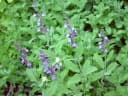
Salvia officinalis
Salvia officinalis
Safety & Hazards
The essential oil in this plant contains thujone. Thujone is a GABA receptor antagonist which allows neurons to fire more easily. In larger doses this can cause muscle spasms and convulsions, and can also be toxic to brain, kidney, and liver cells. There has been a lot of negative press regarding thujone, particularly in the mid 19th century when thujone was reported to be more dangerous than alcohol - since shown to be exaggerated; and reports in the 1970’s that it might have a similar effect on the brain to THC (found in cannabis) - since found to be incorrect. Thujone is probably best known for its use in the alcoholic drink ‘Absinthe’. It is also found in the essential oils of many other plants that are used in herbal medicines and foods, including Arborvitae (Thuja species), some Junipers (Juniperus species), Wormwoods (especially Artemisia absinthium) and Sage (Salvia officinalis). There are some legal restrictions in various countries on the quantity of thujone that can be added to foods and drinks and these vary between countries. Side effects from consuming thujone can include sleeplessness and anxiety but, unless the pure essential oil is used, the quantity of thujone found in plants is well within safety levels. Pregnant women, however, may be advised to restrict their use of thujone-containing plants.
Botanical Description
Salvia officinalis is an erect, evergreen, much-branched, perennial plant growing from a woody rootstock; the stems become more or less woody, especially near the base, the plant growing around 25 - 100cm tall[ 74 Title Flora of the USSR. Publication Author Komarov. V. L. Website http://www.biodiversitylibrary.org Publisher Israel Program for Scientific Translation Year 1968 ISBN - Description An immense (25 or more large volumes) and not yet completed translation of the Russian flora. Full of information on plant uses and habitats but heavy going for casual readers. It can be downloaded from the Internet. ]. Sage is a very popular domestic herbal remedy and also much used as a food flavouring. It is often cultivated on a commercial basis. It is also a very ornamental plant and is commonly grown in the herb garden for culinary and medicinal purposes. Many cultivars have been developed both for ornamental and herbal use, some of which are suitable for use as ground cover. Salvia officinalis has a very broad distribution throughout Mediterranean Europe, The population is stable and there are no major threats. The plant is also cultivated and naturalised widely. The plant is classified as 'Least Concern' in the IUCN Red List of Threatened Species(2014)[ 338 Title IUCN Red List of Threatened Species Publication Author Website http://www.iucnredlist.org/ Publisher Year 0 ISBN Description A list of plants under threat and facing possible extinction, usually with brief details of the threats and information on habitat. ].