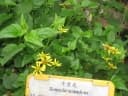
Senecio scandens
Senecio scandens
Safety & Hazards
Senecio scandens is a commonly used medicinal herb, especially in China, where it is a component of more than 100 compound herbal medicines. However, the plant is known to contain pyrrolizidine alkaloids. These alkaloids, which are derived from various amino acids including ornithine, have a range of antinutritional activities. In particular, they can have a pronounced hepatic toxicity, though the lungs and other organs may be affected as well; mutagenic and carcinogenic activities have also been reported[ 299 Title Protabase - Plant Resources of Tropical Africa. Publication Author Website http://www.prota.org Publisher Year 0 ISBN Description An excellent on-line database with detailed information on over 3,200 species of useful plants of Africa. , 1919 Title Senecio scandens Buch.-Ham.: A review on its ethnopharmacology, phytochemistry, pharmacology, and toxicity Publication Journal of Ethnopharmacology 149 (2013) 1-23 Author Wang D., Huang L. & Chen S. Website http://dx.doi.org/10.1016/j.jep.2013.05.048 Publisher Year 2013 ISBN Description ]. The alkaloids have a cumulative effect upon the body and, unless concentrations in a plant are high, occasional use is generally safe and in the case of medicinal herbs, can be very beneficial. In general it is best to seek advice before medicinal use.
Botanical Description
Senecio scandens is an evergreen climbing plant producing slender, scrambling, much-branched woody stems 2 - 5 metres long from a rhizomatous rootstock[ 266 Title Flora of China Publication Author Website http://flora.huh.harvard.edu/china/ Publisher Missouri Botanical Garden Press; St. Louis. Year 1994 ISBN Description An excellent, comprehensive resource in 25 volumes. In addition to the botanical information the flora also gives basic information on habitat and some uses. An on-line version is also available. , 1919 Title Senecio scandens Buch.-Ham.: A review on its ethnopharmacology, phytochemistry, pharmacology, and toxicity Publication Journal of Ethnopharmacology 149 (2013) 1-23 Author Wang D., Huang L. & Chen S. Website http://dx.doi.org/10.1016/j.jep.2013.05.048 Publisher Year 2013 ISBN Description ]. The plant is a commonly used medicinal heb, especially in China where its recorded use dates back to the 6th century and it is an ingredient of more than 100 herbal preparations. It is commnly gathered from the wild for local use and for trade[ 1919 Title Senecio scandens Buch.-Ham.: A review on its ethnopharmacology, phytochemistry, pharmacology, and toxicity Publication Journal of Ethnopharmacology 149 (2013) 1-23 Author Wang D., Huang L. & Chen S. Website http://dx.doi.org/10.1016/j.jep.2013.05.048 Publisher Year 2013 ISBN Description ]. Senecio scandens has a very wide distribution, a large population, is not currently experiencing any major threats and no significant future threats have been identified. The plant is classified as 'Least Concern' in the IUCN Red List of Threatened Species(2019)[ 338 Title IUCN Red List of Threatened Species Publication Author Website http://www.iucnredlist.org/ Publisher Year 0 ISBN Description A list of plants under threat and facing possible extinction, usually with brief details of the threats and information on habitat. ].