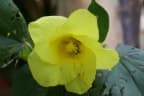
Talipariti pernambucense
Talipariti pernambucense
Safety & Hazards
None known
Botanical Description
Talipariti pernambucense is an evergreen shrub or small tree with a dense, flat-topped crown and horizontal-spreading branches. It grows 3 - 6 metres tall, with a short, slender, slightly contorted bole that can be 20 - 30cm in diameter[ 419 Title Brazilian Trees. Volume 1. 4th Edition. Publication Author Lorenzi. H. Publisher Instituto Plantarum De Estudos Da Flora; Brazil. Year 2002 ISBN 85-86714-17-8 Description Information on 350 species of Brazilian trees. Stunning photographs of each species, brief details on the plant, its uses and how to grow it from seed. A superb work, with the minor irritation that the translation from Portuguese is not of the best. ]. The tree produces a wood of low quality that is sometimes utilized locally. Fast growing, it can be used as a pioneer when establishing native woodland. A very ornamental plant, it is often used as a street tree[ 419 Title Brazilian Trees. Volume 1. 4th Edition. Publication Author Lorenzi. H. Publisher Instituto Plantarum De Estudos Da Flora; Brazil. Year 2002 ISBN 85-86714-17-8 Description Information on 350 species of Brazilian trees. Stunning photographs of each species, brief details on the plant, its uses and how to grow it from seed. A superb work, with the minor irritation that the translation from Portuguese is not of the best. ].