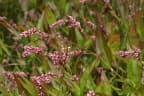
Persicaria decipiens
Persicaria decipiens
Safety & Hazards
Although no specific mention has been made for this species, there have been reports that some members of this genus can cause photosensitivity in susceptible people. Many species also contain oxalic acid (the distinctive lemony flavour of sorrel) - whilst not toxic this substance can bind up other minerals making them unavailable to the body and leading to mineral deficiency. Having said that, a number of common foods such as sorrel and rhubarb contain oxalic acid and the leaves of most members of this genus are nutritious and beneficial to eat in moderate quantities. Cooking the leaves will reduce their content of oxalic acid. People with a tendency to rheumatism, arthritis, gout, kidney stones or hyperacidity should take especial caution if including this plant in their diet since it can aggravate their condition[ 238 Title Encyclopaedia of Herbs and their Uses. Publication Author Bown. D. Publisher Dorling Kindersley, London. Year 1995 ISBN 0-7513-020-31 Description A very well presented and informative book on herbs from around the globe. Plenty in it for both the casual reader and the serious student. Just one main quibble is the silly way of having two separate entries for each plant. ].
Botanical Description
Persicaria decipiens is a slender, weak-stemmed annual plant with stems up to 120cm long that can be erect or grow along the ground, rooting at the nodes[ 305 Title Pacific Island Ecosystems at Risk Publication Author Website http://www.hear.org/pier/scientificnames/index.html Publisher Year 0 ISBN Description A very good website detailing weed species that have been introduced into the Pacific Islands. , 398 Title Edible Wild Plants of Tanzania Publication Author Ruffo, C.K.: Birnie, A. & Tengnas, B. Publisher Regional Land Management Unit; Nairobi. Year 2002 ISBN 9966-896-60-0 Description A very well presented, simple guide to growing and utilizing wild food plants in Tanzania, with line drawings of each plant, a description, habitat and range, non-food as well as food uses, plus basic information on growing the plants. ]. The plant is sometimes harvested from the wild for local use as a food and medicine. The plant has spread widely from its original range, becoming a weed in many parts of the world from the temperate to the tropical zones. The plant spreads by means of its seeds - these float and can be distributed by water; they can become a contaminant in feed and crop seeds; or can be eaten and excreted by animals[ 305 Title Pacific Island Ecosystems at Risk Publication Author Website http://www.hear.org/pier/scientificnames/index.html Publisher Year 0 ISBN Description A very good website detailing weed species that have been introduced into the Pacific Islands. ].