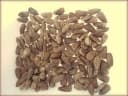
Lagenaria siceraria
Lagenaria siceraria
Safety & Hazards
The pulp surrounding the seed is toxic[ 348 Title Medicinal Plants of the Guianas Publication Author DeFilipps, R. A.; Maina, S. L.; & Crepin, J. Website http://botany.si.edu/bdg/medicinal/index.html Publisher Smithsonian Museum Year 0 ISBN Description A down-loadable PDF document of a book in pre-publication awaiting illustration. An excellent, if rather terse, guide to the traditional medicinal uses of the plants of the region ].
Botanical Description
Lagenaria siceraria is a vigorous, annual climbing plant, producing stems about 9 metres long. The stems scramble over the ground and into the surrounding vegetation, attaching themselves to the plants by means of tendrils that grow out of the leaf axils[ 206 Title Oriental Vegetables Publication Author Larkcom J. Publisher John Murray Year 1991 ISBN 0-7195-4781-4 Description Well written and very informative. , 299 Title Protabase - Plant Resources of Tropical Africa. Publication Author Website http://www.prota.org Publisher Year 0 ISBN Description An excellent on-line database with detailed information on over 3,200 species of useful plants of Africa. ]. Bottle gourd is one of the earliest of domesticated plants, with evidence of cultivation dating back perhaps as far as 13,000 BC in Peru. The plant is still widely cultivated, in both the tropics and the sub-tropics, for its edible fruit when and for the hard wooden shell of the mature fruit, which can be used for making containers, musical instruments etc[ 206 Title Oriental Vegetables Publication Author Larkcom J. Publisher John Murray Year 1991 ISBN 0-7195-4781-4 Description Well written and very informative. ]. The products made from calabashes are commonly sold in local markets and as crafts, whilst the fruits and the oil from the seed are also sometimes traded locally. In addition, the plant has a range of traditional medicinal uses; it can be used as a fast-growing summer screen; and is sometimes used as a rootstock..