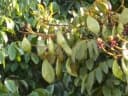
Callerya atropurpurea
Callerya atropurpurea
Safety & Hazards
The twigs and roots are used locally to stupefy fish[ 61 Title A Dictionary of Plants Used by Man. Publication Author Usher. G. Publisher Constable Year 1974 ISBN 0094579202 Description Forget the sexist title, this is one of the best books on the subject. Lists a very extensive range of useful plants from around the world with very brief details of the uses. Not for the casual reader. ]. Millettia and related species in general contain a range of toxic substances, especially isoflavones. Rotenone is probably the best known of these isoflavones and it is found especially in the seeds and roots of the plants. Rotenone is often used locally as a fish poison - the rotenone kills or stuns the fish making them easy to catch, but the fish remain perfectly safe for warm-blooded creatures to eat. Rotenone is classified by the World Health Organization as moderately hazardous. It is mildly toxic to humans and other mammals, but extremely toxic to many insects (hence its use as an insecticide) and also to aquatic life, including fish. This higher toxicity in fish and insects is because the lipophilic rotenone is easily taken up through the gills or trachea, but not as easily through the skin or the gastrointestinal tract. The lowest lethal dose for a child is 143 mg/kg, but human deaths from rotenone poisoning are rare because its irritating action causes vomiting. Deliberate ingestion of rotenone, however, can be fatal. The compound decomposes when exposed to sunlight and usually has an activity of six days in the environment. Millettia species often also contain other potentially toxic compounds, especially saponins and alkaloids[ 1309 Title The Leguminosae; A Source Book of Characteristics, Uses and Nodulation Publication Author Allen O.N.; Allen E.K. Publisher University of Wisconsin Year 1981 ISBN 0-333-32221-5 Description An amazing and comprehensive work, giving a brief guide to the many genera of the family Fabaceae and also the principle uses of the genus. ].
Botanical Description
Callerya atropurpurea is an evergreen tree with a dense, dome-like crown; it can grow from 5 - 30 metres tall. The usually cylindrical bole is fairly slender, it can be free of branches for around 13 metres with steep buttresses 150 - 300cm high, 20cm thick and 40 - 60cm out from the tree[ 334 Title Flora of Peninsula Malaysia Publication Author Website http://www.tfbc.frim.gov.my Publisher Year 0 ISBN Description In the process of being assembled (15/07/09), it is currently a series of check sheets giving species name, brief description, habitat and high quality photos of the plants. , 1532 Title A Revision of Callerya Endl. (including Padbruggea and Whitfordiodendron) (Papilionaceae; Millettieae) Publication Blumea 39 (1994) 1-40 Author Schot A.M. Publisher Year 1994 ISBN Description ]. The tree is harvested from the wild for its timber and is used as an insecticide.