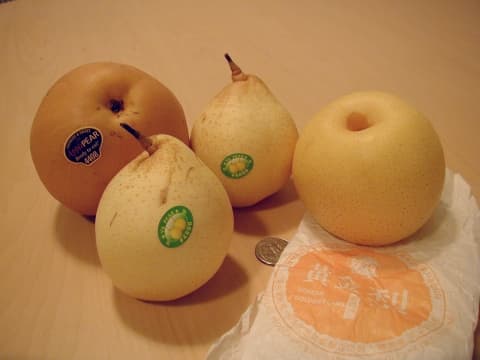
Pyrus pyrifolia culta
Pyrus pyrifolia culta
Safety & Hazards
Although no specific information has been seen for this plant, the seed of many species in the family Rosaceae are likely to contain cyanogenic glycosides. When injested, these compounds break down in the digestive tract to release cyanide. Used in small quantities in both traditional and conventional medicine, this exceedingly poisonous compound has been shown to stimulate respiration, improve digestion, and promote a sense of well-being[ 238 Title Encyclopaedia of Herbs and their Uses. Publication Author Bown. D. Publisher Dorling Kindersley, London. Year 1995 ISBN 0-7513-020-31 Description A very well presented and informative book on herbs from around the globe. Plenty in it for both the casual reader and the serious student. Just one main quibble is the silly way of having two separate entries for each plant. ]. It is also claimed by some to be of benefit in the treatment of cancer - though this claim has been largely refuted. In larger concentrations, however, cyanide can cause gasping, weakness, excitement, pupil dilation, spasms, convulsions, coma and respiratory failure leading to death[ 293 Title Poisonous Plants of North Carolina Publication Author Website http://www.ces.ncsu.edu/depts/hort/consumer/poison/poison.htm Publisher Year 0 ISBN Description An excellent concise but comprehensive guide to toxic plants that grow in N. Carolina. It lists even those plants that are of very low toxicity, including several well-known food plants such as carrots and potatoes. ]. The levels of toxin can be detected by the level of bitterness:- sweet almonds, for example, contain only very low levels of it and are safe to eat in quantity, whilst bitter almonds (which are used as a flavouring in foods such as marzipan) contain much higher levels and should only be eaten in very small quantities. Great caution should be employed if the taste is moderately to very bitter[ K Title Plants for a Future Author Ken Fern Description Notes from observations, tasting etc at Plants For A Future and on field trips. ].
Botanical Description
Pyrus pyrifolia culta is a deciduous tree that can grow from 7 - 15 metres tall[ 11 Title Trees and Shrubs Hardy in Great Britain. Vol 1 - 4 and Supplement. Publication Author Bean. W. Publisher Murray Year 1981 ISBN - Description A classic with a wealth of information on the plants, but poor on pictures. ]. The Asian Pear is much appreciated for its crisp, juicy fruits and has a history of cultivation dating back at least 2,000 years. It is widely cultivated for its edible fruit, especially in China and Japan, but increasingly in other regions of the temperate and subtropical zones[ 11 Title Trees and Shrubs Hardy in Great Britain. Vol 1 - 4 and Supplement. Publication Author Bean. W. Publisher Murray Year 1981 ISBN - Description A classic with a wealth of information on the plants, but poor on pictures. , 317 Title Mansfeld's Database of Agricultural and Horticultural Plants Publication Author Website http://mansfeld.ipk-gatersleben.de/pls/htmldb_pgrc/f?p=185:3:4292127278597336 Publisher Year 0 ISBN Description Terse details of a huge range of useful plants. ]. The plant also has a range of medicinal uses and a useful wood.