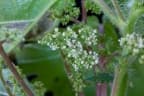
Laportea aestuans
Laportea aestuans
Safety & Hazards
The leaves contain irritant calcium oxalate crystals which can cause urticaria[ 348 Title Medicinal Plants of the Guianas Publication Author DeFilipps, R. A.; Maina, S. L.; & Crepin, J. Website http://botany.si.edu/bdg/medicinal/index.html Publisher Smithsonian Museum Year 0 ISBN Description A down-loadable PDF document of a book in pre-publication awaiting illustration. An excellent, if rather terse, guide to the traditional medicinal uses of the plants of the region ]. This is likely to be very similar to the common nettle (Urtica urens) where the crystals are most prevalent in older leaves, especially once the plant has started flowering - the young leaves are a very wholesome food to eat[ K Title Plants for a Future Author Ken Fern Description Notes from observations, tasting etc at Plants For A Future and on field trips. ]. Contact of the skin with the stinging hairs causes pain and blisters, but this effect is lost when plant parts are dried[ 299 Title Protabase - Plant Resources of Tropical Africa. Publication Author Website http://www.prota.org Publisher Year 0 ISBN Description An excellent on-line database with detailed information on over 3,200 species of useful plants of Africa. ].
Botanical Description
Laportea aestuans is a little-branched, annual plant usually growing up to 1 metre tall, occasionally to 3 metres. The stem is fleshy, becoming slightly woody at the base, and the whole plant is densely covered with stinging hairs up to 1mm long[ 299 Title Protabase - Plant Resources of Tropical Africa. Publication Author Website http://www.prota.org Publisher Year 0 ISBN Description An excellent on-line database with detailed information on over 3,200 species of useful plants of Africa. ]. A popular medicinal herb within its range, the plant also provides a useful fibre and edible leaves. It is harvested from the wild for local use.