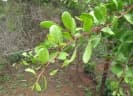
Gymnosporia senegalensis
Gymnosporia senegalensis
Safety & Hazards
Though the leaves are widely used in medicines they are free enough of toxic substances not to kill laboratory test mice, unlike the root-bark which can cause a 40% mortality[ 332 Title The Useful Plants of West Tropical Africa. Publication Author Burkil. H. M. Publisher Royal Botanic Gardens; Kew. Year 1985 - 2004 ISBN Description Brief descriptions and details of the uses of over 4,000 plants. A superb, if terse, resource, it is also available electronically on the Web - see http://www.aluka.org/ ]. A leaf-infusion does however intoxicate fish[ 332 Title The Useful Plants of West Tropical Africa. Publication Author Burkil. H. M. Publisher Royal Botanic Gardens; Kew. Year 1985 - 2004 ISBN Description Brief descriptions and details of the uses of over 4,000 plants. A superb, if terse, resource, it is also available electronically on the Web - see http://www.aluka.org/ ].
Botanical Description
Gymnosporia senegalensis is a deciduous shrub or small tree growing up to 8 metres tall with a bole that is usually around 25 cm in diameter, with some specimens up to 70 cm[ 332 Title The Useful Plants of West Tropical Africa. Publication Author Burkil. H. M. Publisher Royal Botanic Gardens; Kew. Year 1985 - 2004 ISBN Description Brief descriptions and details of the uses of over 4,000 plants. A superb, if terse, resource, it is also available electronically on the Web - see http://www.aluka.org/ ]. The plant is often harvested from the wild for local use as a food, medicine etc. The root is a common market commodity in Dakar markets, where it is considered one of the more active drugs in the Senegalese pharmacopoeia[ 332 Title The Useful Plants of West Tropical Africa. Publication Author Burkil. H. M. Publisher Royal Botanic Gardens; Kew. Year 1985 - 2004 ISBN Description Brief descriptions and details of the uses of over 4,000 plants. A superb, if terse, resource, it is also available electronically on the Web - see http://www.aluka.org/ ]. The plant has good potential for use as a pioneer species when restoring woodland in drier areas.