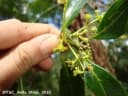
Ocotea catharinensis
Ocotea catharinensis
Safety & Hazards
None known
Botanical Description
Ocotea catharinensis is an evergreen tree with an open, wide crown growing 25 - 30 metres tall. The cylindrical bole can be 60 - 90cm in diameter[ 419 Title Brazilian Trees. Volume 1. 4th Edition. Publication Author Lorenzi. H. Publisher Instituto Plantarum De Estudos Da Flora; Brazil. Year 2002 ISBN 85-86714-17-8 Description Information on 350 species of Brazilian trees. Stunning photographs of each species, brief details on the plant, its uses and how to grow it from seed. A superb work, with the minor irritation that the translation from Portuguese is not of the best. ]. The tree yields a good quality timber which is traded internationally[ 402 Title Contribution to an evaluation of tree species using the new CITES Listing Criteria Publication Author Website http://sea.unep-wcmc.org/species/tree_study/ Publisher UNEP-WCMC; Cambridge. Year 1999 ISBN Description A document produced by UNEP World Conservation Monitoring Centre in 1999. It contains fact sheets on more than 200 tree species from around the globe. ]. It has been heavily harvested from the wild. It also yields an essential oil that is used in perfumery. Formerly abundant, this slow-growing species has become rare because of the levels of exploitation of its timber. An essential oil is also harvested from the bark for the perfume industry. Its habitat also continues to decline. The plant is classified as 'Vulnerable' in the IUCN Red List of Threatened Species(2011)[ 338 Title IUCN Red List of Threatened Species Publication Author Website http://www.iucnredlist.org/ Publisher Year 0 ISBN Description A list of plants under threat and facing possible extinction, usually with brief details of the threats and information on habitat. ].