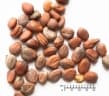
Raphanus sativus
Raphanus sativus
Safety & Hazards
The Japanese radishes have higher concentrations of glucosinolate, a substance that acts against the thyroid gland. It is probably best to remove the skin[1].
Cultivation Details
Very easily cultivated fast-growing plants which prefer a rich light soil with ample moisture[2, 3, 4]. They dislike very heavy or acid soils[2, 5]. Plants are susceptible to drought and require irrigation during dry spells in the summer or the root quality will rapidly deteriorate and the plant will go to seed. Radishes are widely cultivated for their edible roots. There are many named varieties[6] that are able to supply edible roots all year round. Over the centuries a number of distinct groups have evolved through cultivation, these have been classified by the botanists as follows. A separate entry has been made for each group:- R. sativus. The common radish. Fast maturing plants with small roots that can be round or cylindrical and usually have red skins. They are grown primarily for their roots which in some varieties can be ready within three weeks from sowing the seed and are used mainly in salads. These are mainly grown for spring, summer and autumn use and can produce a crop within a few weeks of sowing. R. sativus caudatus. The rat-tailed radishes. This group does not produce roots of good quality, it is cultivated mainly for the edible young seedpods which are harvested in the summer. R. sativus niger. The Oriental and Spanish radishes. These are grown for their larger edible root which can be round or cylindrical and can be available throughout the winter. R. sativus oleiformis. The fodder radishes. These are grown mainly for their leaves and oil-rich seeds, they are used as a green manure or stock feed though they can also be eaten by people. The roots of these plants soon become fibrous, though they make acceptable eating when young. Radishes are a good companion plant for lettuces, nasturtiums, peas and chervil, tomatoes and cucumbers[7, 8]. They are said to repel cucumber beetles if planted near cucumber plants and they also repel the vine borers which attack squashes, marrows and courgettes[9]. They grow badly with hyssop[7, 8] and with grape vines[10].
Propagation
Seed - sow outdoors in situ in succession from late winter to the middle of summer. Germination takes place within a few days of sowing the seed. If you want a constant supply of the roots then you need to sow seed every 2 - 3 weeks. Cite as: Temperate Plants Database, Ken Fern. temperate.theferns.info. 2026-02-21. <temperate.theferns.info/plant/Raphanus+sativus>
Pollinators
Bees, Flies
References
- [1]Wonder Crops. 1987. — Natural Food Institute, ↩︎Fascinating reading, this is an annual publication. Some reports do seem somewhat exaggerated though.
- [2]New Vegetable Growers Handbook. — Simons. · Penguin · 1977 · ISBN 0-14-046-050-0 ↩︎A good guide to growing vegetables in temperate areas, not entirely organic.
- [3]Salads all the Year Round. — Larkcom. J. · Hamlyn · 1980 ↩︎A good and comprehensive guide to temperate salad plants, with full organic details of cultivation.
- [4]Vegetables — Phillips. R. & Rix. M. · Macmillan Reference Books, London. · 1995 · ISBN 0 333 62640 0 ↩︎Excellent and easily read book with good information and an excellent collection of photos of vegetables from around the world, including many unusual species.
- [5]The Gardener's Assistant. — Thompson. B. · Blackie and Son. · 1878 · ISBN - ↩︎Excellent general but extensive guide to gardening practices in the 19th century. A very good section on fruits and vegetables with many little known species.
- [6]Cornucopia - A Source Book of Edible Plants. — Facciola. S. · Kampong Publications · 1990 · ISBN 0-9628087-0-9 ↩︎Excellent. Contains a very wide range of conventional and unconventional food plants (including tropical) and where they can be obtained (mainly N. American nurseries but also research institutes and a lot of other nurseries from around the world.
- [7]Companion Plants. — Philbrick H. and Gregg R. B. · Watkins · 1979 · ISBN - ↩︎Details of beneficial and antagonistic relationships between neighbouring plants.
- [8]Companion Planting for Successful Gardening. — Riotte. L. · Garden Way, Vermont, USA. · 1978 · ISBN 0-88266-064-0 ↩︎Fairly good.
- [9]Encyclopaedia of Herbs and their Uses. — Bown. D. · Dorling Kindersley, London. · 1995 · ISBN 0-7513-020-31 ↩︎A very well presented and informative book on herbs from around the globe. Plenty in it for both the casual reader and the serious student. Just one main quibble is the silly way of having two separate entries for each plant.
- [10]A - Z of Companion Planting. — Allardice.P. · Cassell Publishers Ltd. · 1993 · ISBN 0-304-34324-2 ↩︎A well produced and very readable book.
- [11]The Garden. Volume 111. — RHS. · Royal Horticultural Society · 1986 · ISBN - ↩︎Snippets of information from the magazine of the RHS, including an article on Crambe maritima and another on several species thought to be tender that are succeeding in a S. Devon garden.
- [12]Medicinal Plants of China — Duke. J. A. and Ayensu. E. S. · Reference Publications, Inc. · 1985 · ISBN 0-917256-20-4 ↩︎Details of over 1,200 medicinal plants of China and brief details of their uses. Often includes an analysis, or at least a list of constituents. Heavy going if you are not into the subject.
- [13]Edible and Medicinal Plants. — Launert. E. · Hamlyn · 1981 · ISBN 0-600-37216-2 ↩︎Covers plants in Europe. a drawing of each plant, quite a bit of interesting information.
- [14]Herbs — Phillips. R. & Foy. N. · Pan Books Ltd. London. · 1990 · ISBN 0-330-30725-8 ↩︎Deals with all types of herbs including medicinal, culinary, scented and dye plants. Excellent photographs with quite good information on each plant.
- [15]Sturtevant's Edible Plants of the World. — Hedrick. U. P. · Dover Publications · 1972 · ISBN 0-486-20459-6 ↩︎Lots of entries, quite a lot of information in most entries and references.
- [16]The Encyclopedia of Medicinal Plants — Chevallier. A. · Dorling Kindersley. London · 1996 · ISBN 9-780751-303148 ↩︎An excellent guide to over 500 of the more well known medicinal herbs from around the world.
- [17]A Barefoot Doctors Manual. — ? · Running Press; Philadelphica. · 1977 · ISBN 0-914294-92-X ↩︎A very readable herbal from China, combining some modern methods with traditional chinese methods.
- [18]Glossary of Indian Medicinal Plants (Including the Supplement). — Chopra. R. N., Nayar. S. L. and Chopra. I. C. · Council of Scientific and Industrial Research, New Delhi. · 1986 · ISBN - ↩︎Very terse details of medicinal uses of plants with a wide range of references and details of research into the plants chemistry. Not for the casual reader.
- [19]Handbook of Chinese Herbs and Formulas. — Yeung. Him-Che. · Institute of Chinese Medicine, Los Angeles · 1985 · ISBN - ↩︎An excellent Chinese herbal giving information on over 500 species. Rather technical and probably best suited to the more accomplished user of herbs.
- [20]The Herb Book. — Lust. J. · Bantam books · 1983 · ISBN 0-553-23827-2 ↩︎Lots of information tightly crammed into a fairly small book.
- [21]A Modern Herbal. — Grieve. · Penguin · 1984 · ISBN 0-14-046-440-9 ↩︎Not so modern (1930's?) but lots of information, mainly temperate plants.
- [22]Green Manures. — Woodward. L. Burge. P. · Elm Farm Research Centre. · 1982 · ISBN - ↩︎Green manure crops for temperate areas. Quite a lot of information on a number of species.
- [PFAF]Plants for a Future — pfaf.org ↩︎