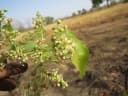
Pseudocedrela kotschyi
Pseudocedrela kotschyi
Cultivation Details
Found in the wild on heavy and poorly drained soils[1]. The tree can be managed by coppicing and pollarding[1]. Trees are often subject to fire, but are very resistant and survive annual fire for over 50 years[1]. It has been observed that there is often profuse regeneration in the rainy season, and it has been suggested that the fires of the dry season improve the germination of the seeds[1]. On the other hand, it has also been reported that seed is destroyed by fire and that regeneration in localities that are subject to regular fire is limited to root suckers[1].
Propagation
Seed - they lose their viability rapidly, and should be sown soon after collection. Immersion in hot water and soaking for one night improve the germination results[1]. Seedlings have a long taproot, making transplanting difficult[1]. The seeds can be stored for up to 2 months in sealed containers in a cool place. They are easily attacked by insects and it is recommended that ash is added when they are stored[1]. The plant develops root suckers, by which it can spread fairly well, resulting in clumps of trees[1]. Cite as: Tropical Plants Database, Ken Fern. tropical.theferns.info. 2026-02-20. <tropical.theferns.info/viewtropical.php?id=Pseudocedrela+kotschyi>
Pollinators
Data unavailable
References
- [1]Protabase - Plant Resources of Tropical Africa. — http://www.prota.org ↩︎An excellent on-line database with detailed information on over 3,200 species of useful plants of Africa.
- [2]Dictionary of Economic Plants. — Uphof. J. C. Th. · Weinheim · 1959 · ISBN - ↩︎An excellent and very comprehensive guide but it only gives very short descriptions of the uses without any details of how to utilize the plants. Not for the casual reader.