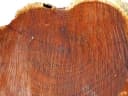
Prosopis nigra
Prosopis nigra
Safety & Hazards
None known
Cultivation Details
A plant of moderate to higher elevations in the tropics and subtropics. Requires a sunny position[1]. Found in the wild on alkaline and clay soils[2]. Prefers deep clay soils with underground water at the root level[2, 3]. Established plants are drought resistant[2]. A slow-growing plant, even when small[4]. This species has a symbiotic relationship with certain soil bacteria, these bacteria form nodules on the roots and fix atmospheric nitrogen. Some of this nitrogen is utilized by the growing plant but some can also be used by other plants growing nearby[5].
Propagation
Seed - best sown as soon as it is ripe in a partially shaded position in a nursery seedbed. A germination rate of greater than 70% can be expected, with the seed sprouting within 7 - 15 days[4]. The seeds germinate easily if they have been scarified by passing through an animal's digestive tract[2]. Like many species within the family Fabaceae, once they have been dried for storage the seeds of this species may benefit from scarification before sowing in order to speed up and improve germination. This can usually be done by pouring a small amount of nearly boiling water on the seeds (being careful not to cook them!) and then soaking them for 12 - 24 hours in warm water. By this time they should have imbibed moisture and swollen - if they have not, then carefully make a nick in the seedcoat (being careful not to damage the embryo) and soak for a further 12 hours before sowing[PFAF]. Cite as: Tropical Plants Database, Ken Fern. tropical.theferns.info. 2026-02-20. <tropical.theferns.info/viewtropical.php?id=Prosopis+nigra>
Pollinators
Data unavailable
References
- [1]Desert Tropicals — http://www.desert-tropicals.com/ ↩︎The main focus of the site is succulent plants, but it also contains information on a wide range of other species. Usually at least one good photograph, plus basic information about the plant and its cultivation.
- [2]Grassland Species - Profiles — http://www.fao.org/ag/AGP/AGPC/doc/Gbase/Default.htm ↩︎Terse information on over 650 species of plants that grow in grassland, including trees, shrubs and perennial plants as well as grasses. Gives a brief description of the plant, its range and habitat and some of its uses.
- [3]Journal of the Arnold Arboretum Vol. 57 — Harvard University · 1976 · http://www.biodiversitylibrary.org ↩︎A botanical magazine, this issue has a comprehensive treatment of the genus Prosopis as well as several other articles. It can be downloaded from the Internet.
- [4]Brazilian Trees. Volume 3. — Lorenzi. H. · Instituto Plantarum De Estudos Da Flora; Brazil. · 2009 · ISBN 85-86714-34-4 ↩︎Information on 350 species of Brazilian trees. Stunning photographs of each species, brief details on the plant, its uses and how to grow it from seed. A superb work, with the minor irritation that the translation from Portuguese is not of the best.
- [5]Nodulation Plants in GRIN Taxonomy — United States Department of Agriculture · http://www.ars-grin.gov/~sbmljw/cgi-bin/taxnodul.pl?language=en ↩︎An online database listing plants that have either positive or negative reports on root and stem nodulation with nitrogen-fixing bacteria.
- [6]IUCN Red List of Threatened Species — http://www.iucnredlist.org/ ↩︎A list of plants under threat and facing possible extinction, usually with brief details of the threats and information on habitat.
- [7]Plantae Diaphoricae Florae Argentinae ó Revista Sistematica de las Plantas medicinales, alimenticias ó de alguna otr — Hieronymus J. · Guillermo Kraft; Buenos Aires · 1882 ↩︎A very old work, but lots of information on the uses of Argentinian plants. It can be downloaded from the internet.
- [8]Dictionary of Economic Plants. — Uphof. J. C. Th. · Weinheim · 1959 · ISBN - ↩︎An excellent and very comprehensive guide but it only gives very short descriptions of the uses without any details of how to utilize the plants. Not for the casual reader.
- [9]Flore Forestiere Du Globe — Chnacerel L. · Gauthier-Villars et Co.; Paris. · 1920 · http://www.biodiversitylibrary.org ↩︎Written in French, a very detailed work on the timbers of the world. It can be downloaded from the Internet.
- [PFAF]Plants for a Future — pfaf.org ↩︎