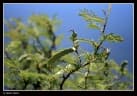
Prosopis alba
Prosopis alba
Safety & Hazards
None known
Cultivation Details
Prosopis alba is a plant mainly of the dry subtropical zone, extending into the tropics at higher elevations in Bolivia and Peru. (though it is found at elevations as low as 360 metres at latitude 18°S in Bolivia). It grows best in areas where annual daytime temperatures fall within the range 10 - 20°c, though it can tolerate 7 - 28°c and an absolute maximum of 45°c[1]. Mature specimens can tolerate occasional short-lived temperatures down as low as -6°c, though younger plants can be killed at -1°c[1]. It prefers a mean annual rainfall in the range 200 - 500mm, tolerating 100 - 700mm[1]. Requires a sunny position[1]. Succeeds in most soils so long as they are well-drained[1]. Tolerates somewhat saline soils[2]. Prefers a pH in the range 5 - 6.5, tolerating 4.5 - 7[1]. Established plants are very drought tolerant[1]. Under optimal conditions a large tree (40 cm in basal diameter and 7 metres in canopy diameter) may produce 40 kg of pods[2]. There are some forms of this plant that are thorn-free[3]. This species has a symbiotic relationship with certain soil bacteria, these bacteria form nodules on the roots and fix atmospheric nitrogen. Some of this nitrogen is utilized by the growing plant but some can also be used by other plants growing nearby[4].
Propagation
Seed - it remains viable for several years in normal storage[2]. The seeds are hardcoated and must be scarified in order to germinate. Burning, nicking and immersion in boiling water are some of the methods that can be used. If the seeds are not extracted from the pods before sowing, they will normally require several minutes of boiling to overcome dormancy. Normally the seeds are sown directly in containers. Germination starts after 2 weeks and continues for up to one month. When the plants are 30 - 35cm tall they are ready for planting in the field[2]. Direct seeding is also possible[2]. Cite as: Temperate Plants Database, Ken Fern. temperate.theferns.info. 2026-02-21. <temperate.theferns.info/plant/Prosopis+alba>
Pollinators
Bees, Insects
References
- [1]Ecocrop — http://ecocrop.fao.org/ecocrop/srv/en/home ↩︎Basic information on a wide range of useful plants, plus details of environmental needs where available.
- [2]Seed Leaflets — Various · Forest & Landscape. Denmark · http://en.sl.life.ku.dk/Publikationer/Udgivelser/PopulaerPublikationer.aspx?katid={D28373CC-6EF3-4EF8-B097-6D83FABF209E}&serieid={9F1C3DB1-6E7B-4CF1-AF53-F480B0CB40EF}&sort=title ↩︎A series of leaflets, jointly produced by the University of Copenhagen and the Royal Botanic Gardens at Kew, focussing on seed information for a number species, but also giving a lot of other information about each plant.
- [3]Forest, Farm, and Community Tree Network — http://www.winrock.org/fnrm/factnet/factnet.htm ↩︎A series of in-depth factsheets on a wide range of plants, especially leguminous trees.
- [4]Nodulation Plants in GRIN Taxonomy — United States Department of Agriculture · http://www.ars-grin.gov/~sbmljw/cgi-bin/taxnodul.pl?language=en ↩︎An online database listing plants that have either positive or negative reports on root and stem nodulation with nitrogen-fixing bacteria.
- [5]Journal of the Arnold Arboretum Vol. 57 — Harvard University · 1976 · http://www.biodiversitylibrary.org ↩︎A botanical magazine, this issue has a comprehensive treatment of the genus Prosopis as well as several other articles. It can be downloaded from the Internet.
- [6]IUCN Red List of Threatened Species — http://www.iucnredlist.org/ ↩︎A list of plants under threat and facing possible extinction, usually with brief details of the threats and information on habitat.
- [7]Mansfeld's Database of Agricultural and Horticultural Plants — http://mansfeld.ipk-gatersleben.de/pls/htmldb_pgrc/f?p=185:3:4292127278597336 ↩︎Terse details of a huge range of useful plants.
- [8]Plantae Diaphoricae Florae Argentinae ó Revista Sistematica de las Plantas medicinales, alimenticias ó de alguna otr — Hieronymus J. · Guillermo Kraft; Buenos Aires · 1882 ↩︎A very old work, but lots of information on the uses of Argentinian plants. It can be downloaded from the internet.
- [9]World Agroforesty Centre — http://www.worldagroforestry.org/ ↩︎An excellent online database of a huge range of trees giving very good information on each plant - its uses, ecology, identity, propagation, pests etc.
- [10]Flore Forestiere Du Globe — Chnacerel L. · Gauthier-Villars et Co.; Paris. · 1920 · http://www.biodiversitylibrary.org ↩︎Written in French, a very detailed work on the timbers of the world. It can be downloaded from the Internet.