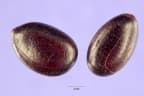
Prosopis africana
Prosopis africana
Safety & Hazards
The pounded dry fruits are suitable as a fish poison[1].
Cultivation Details
A tree of semi-arid areas of the tropics, where it is found at elevations up to 1,000 metres. It grows best in areas where the mean annual temperature falls within the range 22 - 35°c, but can tolerate 18 - 40°c[1]. It prefers a mean annual rainfall of 300 - 500mm, tolerating 200 - 700mm[1]. Requires a well-drained soil and a sunny position[1]. Tolerant of most soil types[1]. Prefers a pH in the range 5.5 - 7, but tolerates 5 - 7.5[1]. The tree has a deep, fast-growing tap root[2]. Responds well to coppicing[2]. This is the only tropical African Prosopis species, occurring from Senegal to Ethiopia in the zone between the Sahel and savannah forests[1]. This species has a symbiotic relationship with certain soil bacteria, these bacteria form nodules on the roots and fix atmospheric nitrogen. Some of this nitrogen is utilized by the growing plant but some can also be used by other plants growing nearby[3].
Propagation
Seed - fresh, still moist seed does not require pre-treatment, butdried seeds need to be pre-soaked for 12 - 24 hours in warm water until the seed shows visible signs of swelling. If necessary, make a small incision in the seed coat (being sure not to damage the embryo) to allow the ingress of water. Sow the seeds in a nursery bed. Germination of around 85% of the seeds can take place within a week at 25°c[4]. Seedlings are ready for planting out when 14 - 18 weeks old[5]. Air dried seeds can remain viable for several years at room temperature[4]. Cite as: Tropical Plants Database, Ken Fern. tropical.theferns.info. 2026-02-20. <tropical.theferns.info/viewtropical.php?id=Prosopis+africana>
Pollinators
Insects
References
- [1]Ecocrop — http://ecocrop.fao.org/ecocrop/srv/en/home ↩︎Basic information on a wide range of useful plants, plus details of environmental needs where available.
- [2]Grassland Species - Profiles — http://www.fao.org/ag/AGP/AGPC/doc/Gbase/Default.htm ↩︎Terse information on over 650 species of plants that grow in grassland, including trees, shrubs and perennial plants as well as grasses. Gives a brief description of the plant, its range and habitat and some of its uses.
- [3]Nodulation Plants in GRIN Taxonomy — United States Department of Agriculture · http://www.ars-grin.gov/~sbmljw/cgi-bin/taxnodul.pl?language=en ↩︎An online database listing plants that have either positive or negative reports on root and stem nodulation with nitrogen-fixing bacteria.
- [4]Seed Leaflets — Various · Forest & Landscape. Denmark · http://en.sl.life.ku.dk/Publikationer/Udgivelser/PopulaerPublikationer.aspx?katid={D28373CC-6EF3-4EF8-B097-6D83FABF209E}&serieid={9F1C3DB1-6E7B-4CF1-AF53-F480B0CB40EF}&sort=title ↩︎A series of leaflets, jointly produced by the University of Copenhagen and the Royal Botanic Gardens at Kew, focussing on seed information for a number species, but also giving a lot of other information about each plant.
- [5]World Agroforesty Centre — http://www.worldagroforestry.org/ ↩︎An excellent online database of a huge range of trees giving very good information on each plant - its uses, ecology, identity, propagation, pests etc.
- [6]Journal of the Arnold Arboretum Vol. 57 — Harvard University · 1976 · http://www.biodiversitylibrary.org ↩︎A botanical magazine, this issue has a comprehensive treatment of the genus Prosopis as well as several other articles. It can be downloaded from the Internet.
- [7]Trees and Shrubs of the Sahel. Their Characteristics and Uses. — von Maydell H. · Deutsche Gesellschaft fur Technische Zusammenarbeit; Germany · 1990 · ISBN 3-8236-1198-4 ↩︎A well-researched book, usually with more than one photograph of each species and good information on the plant and its uses.