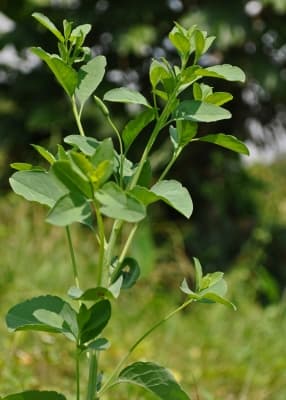
Porophyllum ruderale
Porophyllum ruderale
Safety & Hazards
None known
Cultivation Details
Porophyllum ruderale is an annual plant found from the warm temperate zone of southern N. America and south through the tropical Americas to Bolivia and Peru. It is usually found in very freely draining soils, often in semi-arid regions where it grows after rains. Requires a sunny position, succeeding in a range of soil types so long as they are well-drained. The subspecies macrocephalum is the form more commonly grown for its edible leaves[1]. The aromatic oils, which are contained largely in the pores or glands that are especially plentiful on the leaves, produce a strong odour when the foliage is bruised, broken, or heated. Cures, real or fancied, that are attributed to various species of Porophyllum are probably largely due to either the soothing properties of the oils or the imagination by the patient that anything that is so odoriferous must be beneficial[1].
Propagation
Seed - sow in containers in a greenhouse in the spring. Plant out after the last expected frosts and give protection on cold nights. Cite as: Temperate Plants Database, Ken Fern. temperate.theferns.info. 2026-02-21. <temperate.theferns.info/plant/Porophyllum+ruderale>
Pollinators
Insects
References
- [1]Monograph of the plant genus Porophyllum (Compositae: Helenieae). — Johnson R.R. · 1969 ↩︎An in-depth treatment of the genus Porophyllum
- [2]Pacific Island Ecosystems at Risk — http://www.hear.org/pier/scientificnames/index.html ↩︎A very good website detailing weed species that have been introduced into the Pacific Islands.
- [3]Flora of Guatemala — Standley P.C. & J. A. Steyermark · 1946 - 1976 · http://www.archive.org/ ↩︎A superb reference, though somewhat dated. Gives lots of plant uses as well as information on plant habit and habitat. The entire flora (13 volumes) can now be downloaded from http://www.archive.org/
- [4]Flora of N. America — http://flora.huh.harvard.edu/fna/ ↩︎An on-line version of the flora with an excellent description of the plant including a brief mention of plant uses.
- [5]Cornucopia II — Facciola. S. · Kampong Publications, California. · 1998 · ISBN 0-9628087-2-5 ↩︎The second edition of an excellent guide to the edible uses of plants, though it does not give any details of cultivation etc.
- [6]Antifungal activity of essential oils extracted from Agastache mexicana ssp. Xolocotziana and Porophyllum linaria ag — Zaida N. Juárez; Luis R. Hernández et al · 2015 · ISBN 0926-6690 ↩︎