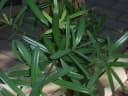
Podocarpus latifolius
Podocarpus latifolius
Safety & Hazards
None known
Cultivation Details
In tropical areas the tree is found mainly at elevations of 900 - 3,200 metres, though it descends to sea level in the subtropics[1]. It prefers an annual rainfall in the range 1,000 - 2,000mm and a mean annual temperature of 9 - 19°c[1]. Older plants can withstand light frosts, though young plants are damaged or killed[1]. Prefers a moist but well-drained, deep, fertile soil, growing better where there is a mulch of organic matter on the soil[1, 2]. Plants grow well in full sun but are also fairly shade tolerant[1, 2]. Plants are susceptible to drought[1]. Studies in South Africa showed that natural regeneration of Podocarpus latifolius is abundant, especially in small and medium-sized gaps in the forest[1]. Growth is slow under natural conditions; for trees with bole diameters between 10cm and 90cm, mean diameter increment is 2 - 3mm/year. In cultivation the growth rates are usually also quite low, but they depend on soil fertility and available water. For 32-year-old trees in Rwanda a height growth of 30 - 56cm/year has been recorded, and a diameter growth of 4 - 13 mm/year[1]. Young trees up to pole size can be coppiced. In larger trees the branches become drooping, and some pruning is often practised[1]. In natural forest in the southern Cape region of South Africa, trees are selectively harvested under a felling cycle of 10 years, and selected according to externally visible criteria of maturity[1]. Trees 8 - 10 metres tall may already bear fruit[1]. Bee nests are often found in hollows on the tree[1]. This species is the national tree of South Africa[1]. Species in this genus are generally slow-growing[3]. A dioecious species; both male and female forms need to be grown if fruit and seed are required.
Propagation
Seed - fresh seeds should be cleaned and sown within 4 days in a mixture of well-rotted compost and washed sand. They germinate in 1 - 2 months, and the germination rate is up to 80%[1]. Cracking of the seed coat has been recommended to speed up germination[1]. When transplanting, care should be taken not to damage the taproot[1]. The seedlings should be well watered. It is usually recommended to plant in shade and not in the full light, but in a test in South Africa seedlings grown without shade showed the best growth[1]. Wildlings are sometimes also collected for planting[1]. Seeds can be stored in a cold store for up to 1 year without losing much of their germination capacity, but moisture loss should be avoided[1]. Seeds stored in perforated polyethylene bags with damp sawdust showed a germination rate of 72% after one year[1]. Cite as: Tropical Plants Database, Ken Fern. tropical.theferns.info. 2026-02-20. <tropical.theferns.info/viewtropical.php?id=Podocarpus+latifolius>
Pollinators
Wind
References
- [1]Protabase - Plant Resources of Tropical Africa. — http://www.prota.org ↩︎An excellent on-line database with detailed information on over 3,200 species of useful plants of Africa.
- [2]Institute of Food and Agricultural Sciences, University of Florida — University of Florida · http://hort.ifas.ufl.edu/shrubs/ ↩︎PDF fact sheets on over 500 shrubs.
- [3]IUCN Red List of Threatened Species — http://www.iucnredlist.org/ ↩︎A list of plants under threat and facing possible extinction, usually with brief details of the threats and information on habitat.
- [4]The Gymnosperm Database — http://www.conifers.org/index.htm ↩︎A vast amount of information on conifers and families of gymnosperms.
- [5]PlantZAfrica.com — http://www.plantzafrica.com ↩︎An excellent site giving detailed descriptions and uses of many S. African plants.