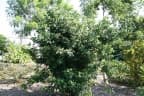
Picramnia pentandra
Picramnia pentandra
Safety & Hazards
None known
Cultivation Details
A plant of the subtropics to tropics, where it can be found at elevations up to 600 metres. It is found in areas where the mean annual rainfall can range from 750 - 2,400mm[1]. Plants are moderately intolerant to shade, being able to grow under the canopy of low basal-area forests as well as in openings. Seedlings are apparently more tolerant of shade than adults, and are able to progress from the understorey into the canopy of low forests[1]. They succeed in a wide variety of well-drained soils derived from most parent materials. They are usually not found on the most fertile sites (where competition is severe) or on the worst, such as eroded, rocky ridge tops[1]. The plant has a slow to moderate rate of growth and usually lives from 30 - 60 years[1]. Flowering can commence when plants are 150 - 200cm tall providing sufficient light is available. The plant can flower and produce fruit all year round in moist tropical climates[1]. A dioecious species, both male and female forms need to be grown if fruit and seed are required[1].
Propagation
Seed - sow in containers or in a nursery seedbed. When sown fresh, without pre-treatment, there was a 100% germination rate, starting 14 days after sowing[1]. Prick the seedlings out when they are large enough to handle, and plant out into permanent positions when 15 - 30cm tall. Cite as: Tropical Plants Database, Ken Fern. tropical.theferns.info. 2026-02-20. <tropical.theferns.info/viewtropical.php?id=Picramnia+pentandra>
Pollinators
Bees, Insects
References
- [1]Wildland Shrubs of the United States and its Territories: Thamnic Descriptions — Francis J.K. (Editor) · USDA; Forest Service International Institute of Tropical Forestr · 2000 · http://www.fs.fed.us/global/iitf/wildland_shrubs.htm ↩︎An excellent series of papers, in PDF format, from various authors giving quite detailed information on a range of shrubs growing in the United States and its Territories. It can be downloaded from the Internet.
- [2]Common Trees of Puerto Rico and the Virgin Islands — Little E.L.; Wadsworth F.H. · USDA, Forest Service; Washington. · 1964 ↩︎Contains detailed information, and usually an illustration, on 250 tree species, including both native and exotic species.