Arecaceae FAMILY
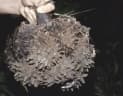
Phytelephas macrocarpa
Phytelephas macrocarpa
Edibility
2/5
Medicinal
0/5
Safety & Hazards
None known
Cultivation Details
HabitEvergreen Tree
Growth—
A plant from the warm tropics, though it can tolerate occasional short-lived temperatures down to around freezing[1]. Prefers a moist soil and a warm, sheltered position[2]. A slow-growing plant, it can take from 7 - 25 years from a young seedling before it starts to produce fruit[1]. The flowers are heavily scented[1]. A dioecious species, both male and female forms need to be grown if fruit and seed are required[3].
Propagation
Seed - it can take 3 - 4 years to germinate[1]. Cite as: Tropical Plants Database, Ken Fern. tropical.theferns.info. 2026-02-20. <tropical.theferns.info/viewtropical.php?id=Phytelephas+macrocarpa>
Pollinators
Data unavailable
References
- [1]Desert Tropicals — http://www.desert-tropicals.com/ ↩︎The main focus of the site is succulent plants, but it also contains information on a wide range of other species. Usually at least one good photograph, plus basic information about the plant and its cultivation.
- [2]Palm and Cycad Societies of Australia. — http://www.pacsoa.org.au/ ↩︎Contains at least a little information on the majority of palm and cycad species, plus a wealth of photographs. A first class website.
- [3]Field Guide to the Palms of the Americas — Henderson A.; Galeano G.; Bernal R. · Princeton University Press; Princeton, New Jersey. · 1995 · ISBN 0-691-08537-4 ↩︎An excellent book, giving basic information on all the 550 species of palms native to the Americas that were known in 1995. Comprehensive information on the plants range and habitat, brief description, some uses and almost 250 photos.
- [4]Illustrated Guide to the Trees of Peru — Pennington, T.D.; Reynel, C. & Daza, A. · David Hunt; Sherbourne, England. · 2004 · ISBN 0 9538134 3 6 ↩︎A very terse guide to the trees of Peru, managing to give basic guides to a large number of genera, with more detail on a few species in each genus.
- [5]Contributions from the United States National Herbarium Vol. 27 — Standley P.C. · Smithsonian Institute; Washington. · 1928 · http://www.biodiversitylibrary.org ↩︎Contains a Flora of the Panama Canal zone
- [6]Cornucopia II — Facciola. S. · Kampong Publications, California. · 1998 · ISBN 0-9628087-2-5 ↩︎The second edition of an excellent guide to the edible uses of plants, though it does not give any details of cultivation etc.
- [7]Nuts. — Howes. F. N. · Faber · 1948 · ISBN - ↩︎Rather old but still a masterpiece. Has sections on tropical and temperate plants with edible nuts plus a section on nut plants in Britain. Very readable.
- [8]Dictionary of Economic Plants. — Uphof. J. C. Th. · Weinheim · 1959 · ISBN - ↩︎An excellent and very comprehensive guide but it only gives very short descriptions of the uses without any details of how to utilize the plants. Not for the casual reader.
- [9]Useful Fiber Plants of the World — Dodge C.R. · USDA; Washington. · 1897 · http://www.biodiversitylibrary.org/ ↩︎A rather dated, but very comprehensive catalogue of fibre plants from around the world. The book can be downloaded from the Internet.
- [10]Botanical Museum Leaflets Vol 29 — Harvard University; Cambridge, Massachusetts. · 1983 · http://www.biodiversitylibrary.org ↩︎Some interesting notes on plant uses in tropical America. It can be downloaded from the Internet.
- [PFAF]Plants for a Future — pfaf.org ↩︎