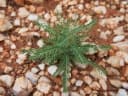
Cultivation Details
It grows on a wide variety of soils, usually on heavy clay and alluvial soils of low-altitude river valleys, on river banks and in flood plains[1]. Outside tropical Africa, the plant is often considered a weed. It shows a marked preference for calcareous sites in humid tropical areas[1]. Mature plants are fast growing and require little or no management once established[1]. Plants may flower 3 months after germination of the seed[1].
Propagation
Seed - Seeds of Phyllanthus maderaspatensis require light to germinate. Germination rates increase linearly with temperature from 15–35°C and decline from 36°C. Below 15°C and above 40°C, germination is very poor. Germination is poor under moisture stress. Phyllanthus maderaspatensis is generally grown from seed, but vegetative propagation by budding, grafting, cutting and root sprouting is possible[1]. Cite as: Tropical Plants Database, Ken Fern. tropical.theferns.info. 2026-02-20. <tropical.theferns.info/viewtropical.php?id=Phyllanthus+maderaspatensis>
Pollinators
Data unavailable
References
- [1]Protabase - Plant Resources of Tropical Africa. — http://www.prota.org ↩︎An excellent on-line database with detailed information on over 3,200 species of useful plants of Africa.
- [2]The Useful Plants of West Tropical Africa. — Burkil. H. M. · Royal Botanic Gardens; Kew. · 1985 - 2004 ↩︎Brief descriptions and details of the uses of over 4,000 plants. A superb, if terse, resource, it is also available electronically on the Web - see http://www.aluka.org/
- [3]IUCN Red List of Threatened Species — http://www.iucnredlist.org/ ↩︎A list of plants under threat and facing possible extinction, usually with brief details of the threats and information on habitat.