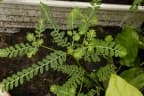
Phyllanthus amarus
Phyllanthus amarus
Safety & Hazards
None known
Cultivation Details
Requires a sunny position. Sandy loam and black soils with a pH of 7.5 - 8 are considered best[1]. The plant has explosive seed capsules that propel the seeds some distance from the plant[2]. Originally native to tropical America, the plant has spread to become a weed, often invasive, in many areas of the Tropics[3]. The plant is reported to be a troublesome weed in pulses, soya bean, groundnut, cereals, sugar cane, cassava, taro, sesame, sunflower and cotton[1].
Propagation
Seed - requires light to germinate[1]. Sow in situ - the small seed is usually mixed with sand[1]. Germination is often less than 50%; germination of freshly harvested seeds is slower than that of older seeds[1]. Seeds dried to 8% moisture content and treated with turmeric rhizome powder under ambient conditions maintained viability for up to 6 months; untreated seeds stored poorly[1]. Cite as: Tropical Plants Database, Ken Fern. tropical.theferns.info. 2026-02-20. <tropical.theferns.info/viewtropical.php?id=Phyllanthus+amarus>
Pollinators
Data unavailable
References
- [1]Protabase - Plant Resources of Tropical Africa. — http://www.prota.org ↩︎An excellent on-line database with detailed information on over 3,200 species of useful plants of Africa.
- [2]Flowers of India — http://www.flowersofindia.net/ ↩︎A wed site of native Indian plants, plus cultivated and naturalized species. It has good quality photos and terse details on more than 3,000 species and cultivars.
- [3]Pacific Island Ecosystems at Risk — http://www.hear.org/pier/scientificnames/index.html ↩︎A very good website detailing weed species that have been introduced into the Pacific Islands.
- [4]Journal of the Arnold Arboretum. Vol. 38 — Various · Harvard University. · 1957 · http://www.biodiversitylibrary.org ↩︎Amongst other things, it contains an article on the Juglans of central America. It can be downloaded from the Internet.
- [5]Medicinal Plants of the Guianas — DeFilipps, R. A.; Maina, S. L.; & Crepin, J. · Smithsonian Museum · http://botany.si.edu/bdg/medicinal/index.html ↩︎A down-loadable PDF document of a book in pre-publication awaiting illustration. An excellent, if rather terse, guide to the traditional medicinal uses of the plants of the region
- [6]The Useful Plants of West Tropical Africa. — Burkil. H. M. · Royal Botanic Gardens; Kew. · 1985 - 2004 ↩︎Brief descriptions and details of the uses of over 4,000 plants. A superb, if terse, resource, it is also available electronically on the Web - see http://www.aluka.org/
- [7]Ethnobotany of the Valaiyans of Karandamalai, Dindigul District, Tamil Nadu, India. — Kottaimuthu. R. · The Berkeley Electronic Press · 2008 · http://opensiuc.lib.siu.edu/ebl ↩︎Terse information on the medicinal uses of plants by a tribe of people in southern India. It can be downloaded from the Internet.