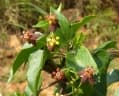
Pentarrhinum insipidum
Pentarrhinum insipidum
Safety & Hazards
There have been occasionl reports that the plant is poisonous, though it is certainly not[1].
Cultivation Details
Found from the tropics to the subtropics, it can be cultivated almost anywhere - from areas with strong frosts to hot and humid areas. It dies back in unfavourable conditions and resprouts when conditions improve[2]. Grows best in areas with some shade[3]. Prefers a sandy soil[3].
Propagation
Seed - best sown when fresh - remove the tufts of hair and sow the seed in a well-drained mix of one part sandy soil and one part compost. Cover seeds lightly with the mix. Water regularly and ensure that the substrate is kept moist until the seedlings are large enough to transplant. Decrease watering during winter[2]. Seedlings grow away quickly[2]. Cite as: Tropical Plants Database, Ken Fern. tropical.theferns.info. 2026-02-20. <tropical.theferns.info/viewtropical.php?id=Pentarrhinum+insipidum>
Pollinators
Data unavailable
References
- [1]Protabase - Plant Resources of Tropical Africa. — http://www.prota.org ↩︎An excellent on-line database with detailed information on over 3,200 species of useful plants of Africa.
- [2]PlantZAfrica.com — http://www.plantzafrica.com ↩︎An excellent site giving detailed descriptions and uses of many S. African plants.
- [3]Gemsbok Bean and Kalahari Truffle — Leffers A. · Gamsberg MacMillan; Namibia. · 2003 · ISBN 99916-0-491-X ↩︎Details of the traditional uses of over 200 species of plants in northeastern Namibia. Written for the non-expert, there is usually at least one photograph with each plant entry.
- [4]The Useful Plants of West Tropical Africa. — Burkil. H. M. · Royal Botanic Gardens; Kew. · 1985 - 2004 ↩︎Brief descriptions and details of the uses of over 4,000 plants. A superb, if terse, resource, it is also available electronically on the Web - see http://www.aluka.org/