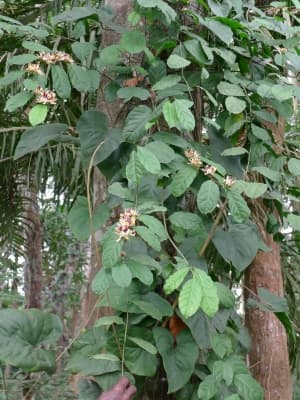
Pentadiplandra brazzeana
Pentadiplandra brazzeana
Safety & Hazards
The fruit is used as fish poison[1].
Cultivation Details
The flowers can be single-sex or bisexual[1]. The flowering period continues for several months; fruit production is normally low and spread out, though shrubby plants seem to have a shorter but more condensed fruiting season[1]. Unconsumed fruits rot on the plant, without falling. They serve as temporary nesting sites to arboreal ants[1]. Seed dispersal is facilitated by the contrast between the extreme sweetness of the pulp of the fruit and the unpleasant bitter taste of seeds, provoking consumers to spit out the seeds. In natural habitats, squirrels, monkeys and apes contribute to the distribution of the seed; in the vicinity of human habitation, distribution by children into secondary habitats is common[1]. Commercial interest in brazzein, the protein obtained from the fruit, is strong. The technology to extract the protein from the fruit pulp as well as technologies to produce brazzein by transferring the gene coding for brazzein into other organisms have been patented, without the intention of benefit sharing[1]. The gene encoding for brazzein has been transferred to the bacteria Escherichia coli and Lactococcus lactis and to maize. Bacterial production systems for brazzein have been developed. Mutants and sections of brazzein have been discovered with sweet-taste properties superior to those of the natural protein[1].
Propagation
Seed - Cite as: Tropical Plants Database, Ken Fern. tropical.theferns.info. 2026-02-20. <tropical.theferns.info/viewtropical.php?id=Pentadiplandra+brazzeana>
Pollinators
Data unavailable
References
- [1]Protabase - Plant Resources of Tropical Africa. — http://www.prota.org ↩︎An excellent on-line database with detailed information on over 3,200 species of useful plants of Africa.