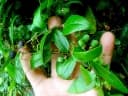
Passiflora suberosa
Passiflora suberosa
Safety & Hazards
Experimental proof of toxicity of this species is not available, but field evidence has indicated poisoning of cattle and ducks[1].
Cultivation Details
Passiflora suberosa has a very wide native dristribution, from the warm temperate zone of southern S. America, through the tropical regions to the warm temperate zone of southern N. America, and can be found from sea level to 2,000 metres or more. Plants, at least from parts of its range, are tolerant of light and short-lived frosts[2]. Moist, well-drained sandy or limestone soils, with or without humusy top layer. Prefers soils with organic content, but will still grow reasonably well in nutrient poor soils. Can tolerate moderate amounts of salt wind without injury. Established plants are very drought tolerant.
Propagation
Seed - Cite as: Temperate Plants Database, Ken Fern. temperate.theferns.info. 2026-02-21. <temperate.theferns.info/plant/Passiflora+suberosa>
Pollinators
Data unavailable
References
- [1]Australian Tropical Rainforest Plants — http://www.anbg.gov.au/cpbr/cd-keys/rfk/index.html ↩︎An online resource giving botanical information, and a little bit about plant usage, for over 2,700 species of plants found in the Australian rainforest.
- [2]Passion Flowers — Vanderplank. J. · Cassell. London. · 1991 · ISBN 0-304-34076-6 ↩︎An excellent book on passion flowers, giving information on hardy species and how to grow the less hardy in greenhouses etc. A bit lacking at times on specific information on hardyness. Excellent photographs.
- [3]Protabase - Plant Resources of Tropical Africa. — http://www.prota.org ↩︎An excellent on-line database with detailed information on over 3,200 species of useful plants of Africa.
- [4]Flowers of India — http://www.flowersofindia.net/ ↩︎A wed site of native Indian plants, plus cultivated and naturalized species. It has good quality photos and terse details on more than 3,000 species and cultivars.
- [5]The New RHS Dictionary of Gardening. 1992. — Huxley. A. · MacMillan Press · 1992 · ISBN 0-333-47494-5 ↩︎Excellent and very comprehensive, though it contains a number of silly mistakes. Readable yet also very detailed.
- [6]Pacific Island Ecosystems at Risk — http://www.hear.org/pier/scientificnames/index.html ↩︎A very good website detailing weed species that have been introduced into the Pacific Islands.
- [7]Flora of Guatemala — Standley P.C. & J. A. Steyermark · 1946 - 1976 · http://www.archive.org/ ↩︎A superb reference, though somewhat dated. Gives lots of plant uses as well as information on plant habit and habitat. The entire flora (13 volumes) can now be downloaded from http://www.archive.org/
- [8]Food Plants in the Americas: A Survey of the Domesticated, Cultivated, and Wild Plants Used for Human Food in North, — Kermath B.M.; Bennett B.C.' Pulsipher L.M. · 2014 ↩︎A pre-publication draft of an amazing, on-going work first started in 1985. It contains information on more than 3,900 taxa from the Americas - from Arctic regions to the Tropics
- [9]A taxonomic revision of Passiflora subgenus Decaloba (Passifloraceae) in Brazil — Milward de Azeved M.A.; Fernando J.; Baumgratz A. & Gonçalve · Magnolia Press; Auckland · 2012 · ISBN 1179-3155 ↩︎
- [10]Flowering Plants of Jamaica — Adams. C.D. · University of the West Indies; Jamaica. · 1972 ↩︎A terse treatment of the flowering plants of Jamaica, with a botanical description of each plant, notes on habitat etc.
- [11]Flora of Peru — Macbride. J.F. · Field Museum of Natural History · 1936 ↩︎An excellent attempt at a Flora of Peru, though it is clear that many of the plants were imperfectly known at that time and so information on them was sketchy. Available for download from the Internet.