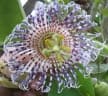
Passiflora actinia
Passiflora actinia
Safety & Hazards
None known
Cultivation Details
A plant of the tropics and subtropics, found at elevations from 350 metres and above. Plants can tolerate occasional temperatures as low as -5°c[1]. Requires a humus-rich, moist but well-drained soil and a position in dappled shade[1]. Prefers a circumneutral soil, disliking very acid or very alkaline conditions[1]. Passiflora species tend to flower and fruit more freely when grown in soils of only moderate fertility[2]. When growing plants in regions near the limits of their cold tolerance, the top growth will usually be killed by winter cold. However, so long as the root is well mulched and is in a very well-drained soil, the plant will usually grow back from the base in the spring[1]. The plant is very suitable for growing in pots in a conservatory or even in a south-facing window[1]. Plants produce tendrils and climb by attaching these to other plants. Plants require a temperature no lower than around 16°c when they are flowering in order to ensure fruit set[2]. If fruit is required, specially when the plant is growing indoors, it is best to hand pollinate using pollen from a flower that has been open for 12 hours to pollinate a newly opened flower before midday[3, 2]. The flowers open in sunny weather and do not open on dull cloudy days[4]. Plants are very tolerant of pruning and can be cut back to ground level if required to rejuvenate the plant[5]. Plants in this genus are notably resistant to honey fungus[2].
Propagation
Pre-soak the seed for 12 hours in warm water and then sow late winter or early spring in a warm greenhouse. If sown in January and grown on fast it can flower and fruit in its first year[3]. The seed germinates in 1 - 12 months at 20°c. Prick out the seedlings into individual pots when they are large enough to handle. It you are intending to grow the plants outdoors, it is probably best to keep them in the greenhouse for their first winter and plant them out into their permanent positions in late spring or early summer, after the last expected frosts. Mulch the roots well in late autumn to protect them from the cold. Cuttings of young shoots, 15cm with a heel, in spring[6]. Leaf bud cuttings in spring. Cuttings of fully mature wood in early summer. Takes 3 months. High percentage[7]. Cite as: Temperate Plants Database, Ken Fern. temperate.theferns.info. 2026-02-21. <temperate.theferns.info/plant/Passiflora+actinia>
Pollinators
Bees
References
- [1]Passion Flowers — Vanderplank. J. · Cassell. London. · 1991 · ISBN 0-304-34076-6 ↩︎An excellent book on passion flowers, giving information on hardy species and how to grow the less hardy in greenhouses etc. A bit lacking at times on specific information on hardyness. Excellent photographs.
- [2]The New RHS Dictionary of Gardening. 1992. — Huxley. A. · MacMillan Press · 1992 · ISBN 0-333-47494-5 ↩︎Excellent and very comprehensive, though it contains a number of silly mistakes. Readable yet also very detailed.
- [3]The Garden. Volume 112. — RHS. · Royal Horticultural Society · 1987 · ISBN - ↩︎Snippets of information from the magazine of the RHS. In particular, there are articles on plants that are resistant to honey fungus, oriental vegetables, Cimicifuga spp, Passiflora species and Cucurbits.
- [4]Gardening on Walls — Grey-Wilson. C. & Matthews. V. · Collins · 1983 · ISBN 0-00-219220-0 ↩︎A nice little book about plants for growing against walls and a small section on plants that can grow in walls.
- [5]Climbers and Wall Shrubs. — Davis. B. · Viking. · 1990 · ISBN 0-670-82929-3 ↩︎Contains information on 2,000 species and cultivars, giving details of cultivation requirements. The text is terse but informative.
- [6]RHS Dictionary of Plants plus Supplement. 1956 — F. Chittendon. · Oxford University Press · 1951 · ISBN - ↩︎Comprehensive listing of species and how to grow them. Somewhat outdated, it has been replaced in 1992 by a new dictionary (see [ 200 ]).
- [7]Growing Unusual Fruit. — Simmons. A. E. · David & Charles; Newton Abbot. · 1972 · ISBN 0-7153-5531-7 ↩︎A very readable book with information on about 100 species that can be grown in Britain (some in greenhouses) and details on how to grow and use them.
- [8]Passifloraceae do Brasil. Estudo do gênero Passiflora L., subgênero Passiflora — Cervi A.C. · 1997 · ISBN 0212-0623 ↩︎
- [9]Food Plants in the Americas: A Survey of the Domesticated, Cultivated, and Wild Plants Used for Human Food in North, — Kermath B.M.; Bennett B.C.' Pulsipher L.M. · 2014 ↩︎A pre-publication draft of an amazing, on-going work first started in 1985. It contains information on more than 3,900 taxa from the Americas - from Arctic regions to the Tropics
- [10]Dicionário das Plantas Úteis do Basil e das Exóticas Cultivadas Vol. 5 — Corrêa M. Pio & Penna L. de Azeredo · Ministério da Agricultura; Rio de Janeiro · 1978 ↩︎A massive work in six volumes, first published in the 1920's and revised in the 1970's. Written in Portuguese.
- [PFAF]Plants for a Future — pfaf.org ↩︎