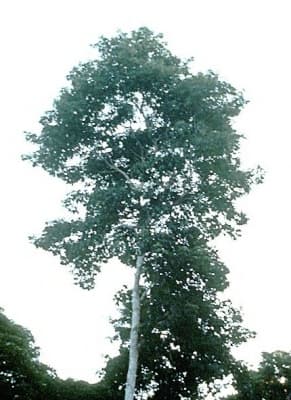
Paratecoma peroba
Paratecoma peroba
Safety & Hazards
A fine dust produced in machining causes skin irritations in some wood workers[1].
Cultivation Details
Prefers a sunny position[2]. Grows best on well-drained soils[2]. Trees are moderately fast-growing when young, reaching a height of around 2.5 metres within two years from seed[2].
Propagation
Seed - best sown as soon as it is ripe in a partially shaded position in a nursery seedbed or in individual containers. A germination rate in excess of 40% can be expected, with the seed sprouting within 15 - 30 days[2]. When the seedbed sown seedlings are 3 - 5cm tall, pot them up into individual containers and they should be ready to plant out 6 - 8 months later[2]. Cite as: Tropical Plants Database, Ken Fern. tropical.theferns.info. 2026-02-20. <tropical.theferns.info/viewtropical.php?id=Paratecoma+peroba>
Pollinators
Data unavailable
References
- [1]Tropical Timbers of the World. Ag. Handbook No. 607. — Chudnoff. Martin. · USDA Forest Service. Wisconsin. · 1984 ↩︎Terse details on the properties of the wood of almost 400 species of trees from the Tropics.
- [2]Brazilian Trees. Volume 1. 4th Edition. — Lorenzi. H. · Instituto Plantarum De Estudos Da Flora; Brazil. · 2002 · ISBN 85-86714-17-8 ↩︎Information on 350 species of Brazilian trees. Stunning photographs of each species, brief details on the plant, its uses and how to grow it from seed. A superb work, with the minor irritation that the translation from Portuguese is not of the best.
- [3]Bignoniaceae: Part II (Tribe Tecomeae) — Gentry A.H. · The New York Botanical Garden, New York · 1992 · ISBN 0-89327-368-6 ↩︎
- [4]South American Timbers: the Properties, Uses and Characteristics of 190 Species. — Bolza. E. & Christensen. F.J. · Commonwealth Scientific and Industrial Research Organization · 1979 · ISBN 0 643 02582 0 ↩︎A very useful guide.