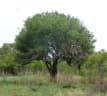
Pappea capensis
Pappea capensis
Safety & Hazards
None known
Cultivation Details
Found in a range of climates and zones from the subtropics to the tropics, it is well suited to cultivation in a wide variety of climatic conditions[1]. Established plants can tolerate extended periods of drought[1]. Under ideal conditions the tree can grow at a moderate rate but it can be slow-growing under dry and/or cold conditions[1]. Plants do not have an aggressive root system[1]. Trees can be pollarded[2].
Propagation
Seed - should be collected from the ripe fruits[1]. Remove the red flesh and sow immediately or store dry in an airtight container. Sow the seed in trays using a well-drained seedling mixture with some river sand added. The seed should be pressed into the medium and covered with approximately 5 mm of sand or seedling medium[1]. Keep the trays in a warm and lightly shaded position until germination, which may take from 6 - 10 weeks under ideal conditions[1]. The seedlings are best left in their trays until they are approximately 20 - 50 mm tall before planting out, taking care not to bruise or damage the young taproot[1]. Cite as: Tropical Plants Database, Ken Fern. tropical.theferns.info. 2026-02-20. <tropical.theferns.info/viewtropical.php?id=Pappea+capensis>
Pollinators
Bees
References
- [1]PlantZAfrica.com — http://www.plantzafrica.com ↩︎An excellent site giving detailed descriptions and uses of many S. African plants.
- [2]Useful Trees and Shrubs in Eritrea — Bein. E.; Habte. B.; Jaber. A.; Birnie. A. & Tengnas. B. · Regional Soil Conservation Unit: Nairobi · 1996 · ISBN 9966-896-24-4 ↩︎A very well written and concise guide to almost 200 species. It gives a brief description of each plant together with its habitat, uses, propagation and cultivation. Line drawings of each plant are also included It can be downloaded from the internet
- [3]Flora Zambesiaca — http://apps.kew.org/efloras/fz/intro.html ↩︎An excellent online flora of plants from the Zambezi River basin. It lists a number of the plant uses as well as the habitats and botanical descriptions of the plants.
- [4]Edible Wild Plants of Tanzania — Ruffo, C.K.: Birnie, A. & Tengnas, B. · Regional Land Management Unit; Nairobi. · 2002 · ISBN 9966-896-60-0 ↩︎A very well presented, simple guide to growing and utilizing wild food plants in Tanzania, with line drawings of each plant, a description, habitat and range, non-food as well as food uses, plus basic information on growing the plants.
- [5]Cornucopia II — Facciola. S. · Kampong Publications, California. · 1998 · ISBN 0-9628087-2-5 ↩︎The second edition of an excellent guide to the edible uses of plants, though it does not give any details of cultivation etc.