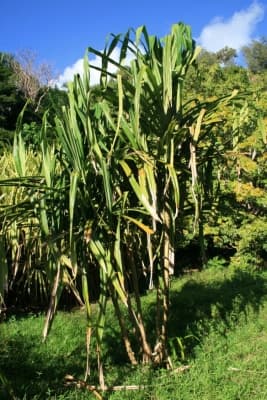
Pandanaceae FAMILY
Pandanus polycephalus
Pandanus polycephalus
Edibility
2/5
Medicinal
0/5
Safety & Hazards
None known
Cultivation Details
HabitEvergreen Shrub
Growth—
Species in this genus generally grow well in most moist, well-dained soils and a sunny position[1]. Littoral species, such as this one, are usually very tolerant of strong, salt-laden winds and somewhat saline soil conditions. Branches do not have dormant buds and so will not resprout if cut back into the old wood[2]. A dioecious species, both male and female forms need to be grown if fruits and seed are required.
Propagation
Seed - best pre-soaked for 24 hours prior to sowing[3]. Cite as: Tropical Plants Database, Ken Fern. tropical.theferns.info. 2026-02-20. <tropical.theferns.info/viewtropical.php?id=Pandanus+polycephalus>
Pollinators
Data unavailable
References
- [1]Encyclopedia of Tropical Plants - Identification and Cultivation of over 3,000 Tropical Plants — Ahmed Fayaz · Firefly Books Ltd.; New Zealand · 2011 · ISBN 978-1-55407-489 ↩︎A good photograph and terse but detailed information for over 3,000 species of tropical plants. An excellent reference.
- [2]Desert Tropicals — http://www.desert-tropicals.com/ ↩︎The main focus of the site is succulent plants, but it also contains information on a wide range of other species. Usually at least one good photograph, plus basic information about the plant and its cultivation.
- [3]Protabase - Plant Resources of Tropical Africa. — http://www.prota.org ↩︎An excellent on-line database with detailed information on over 3,200 species of useful plants of Africa.
- [4]Pandanaceae of the island of Yapen, Papua (West new Guinea), Indonesia, with their nomenclature and notes on the red — Keim A.P. · 2009 · http://10.3767/000651909X476247 ↩︎
- [5]Flora of Peninsula Malaysia — http://www.tfbc.frim.gov.my ↩︎In the process of being assembled (15/07/09), it is currently a series of check sheets giving species name, brief description, habitat and high quality photos of the plants.
- [6]An Enumeration of Philippine Flowering Plants — Merrill E.D. · Bureau of Science, Manila. · 1925 · http://www.biodiversitylibrary.org ↩︎Mainly a list of plant names, plus some synonyms, giving details of where the name was published. Also gives a note on the range of the plant, its habitat and local names. Unfortunately, it does not even give a brief description of the plant.
- [7]Dictionary of Economic Plants. — Uphof. J. C. Th. · Weinheim · 1959 · ISBN - ↩︎An excellent and very comprehensive guide but it only gives very short descriptions of the uses without any details of how to utilize the plants. Not for the casual reader.
- [8]Wild Food Plants of Australia. — Low. T. · Angus and Robertson. · 1989 · ISBN 0-207-14383-8 ↩︎Well presented, clear information and good photographs. An interesting read for the casual reader as well as the enthusiast
- [PFAF]Plants for a Future — pfaf.org ↩︎