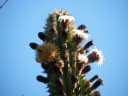
Cactaceae FAMILY Least Concern
Pachycereus pecten-aboriginum
Pachycereus pecten-aboriginum
Edibility
2/5
Medicinal
2/5
Safety & Hazards
None known Baja California Sur, Chiapas, Chihuahua, Guerrero, Jalisco, Michoacán, Nayarit, Oaxaca, Sinaloa, Sonora, Zacatecas
Cultivation Details
HabitEvergreen Tree
Growth—
Pachycereus pecten-aboriginum is a plant of dry areas in the subtropics and tropics, where it is found at elevations from near sea level to more than 1,000 metres. Requires a sunny position, though young plants appreciate a little shade[1]. Requires a well-drained, circum-neutral soil[2]. Established plants are very drought tolerant[3]. The ripe fruits sometimes hang on the plant for several months[4].
Propagation
Seed - Cite as: Tropical Plants Database, Ken Fern. tropical.theferns.info. 2026-02-20. <tropical.theferns.info/viewtropical.php?id=Pachycereus+pecten-aboriginum>
Pollinators
Bats, Birds
References
- [1]Desert Tropicals — http://www.desert-tropicals.com/ ↩︎The main focus of the site is succulent plants, but it also contains information on a wide range of other species. Usually at least one good photograph, plus basic information about the plant and its cultivation.
- [2]The New RHS Dictionary of Gardening. 1992. — Huxley. A. · MacMillan Press · 1992 · ISBN 0-333-47494-5 ↩︎Excellent and very comprehensive, though it contains a number of silly mistakes. Readable yet also very detailed.
- [3]Dictionary of Economic Plants. — Uphof. J. C. Th. · Weinheim · 1959 · ISBN - ↩︎An excellent and very comprehensive guide but it only gives very short descriptions of the uses without any details of how to utilize the plants. Not for the casual reader.
- [4]Taxonomic Revision of Pachycereus (Cactaceae) — Arias S. & Terrazas T. · 2009 · http:// http://www.bioone.org/doi/full/10.1600/036364409787602384 ↩︎An excellent, comprehensive paper, it also lists plant uses.
- [5]Trees and Shrubs of Mexico — Standley P.C. · Smithsonian Institution; Washington · 1926 ↩︎Although dated, it contains a wealth of information on the trees and shrubs of Mexico, including many of their uses. It can be downloaded from the Internet.
- [6]The Cactus Family — Anderson E.F. · Timber Press; Portland, Oregon · 2001 · ISBN 0-88192-498-9 ↩︎An excellent work, giving botanical descriptions of virtually all the cacti, together with their range (but not their habitats) and sometimes also a photo. it also contains a long chapter detailing the many uses of cacti and another on cultivation..
- [7]IUCN Red List of Threatened Species — http://www.iucnredlist.org/ ↩︎A list of plants under threat and facing possible extinction, usually with brief details of the threats and information on habitat.
- [8]Rio Mayo Plants - A study of the flora and vegetation of the valley of the Rio Mayo, Sonora — Gentry H.S. · Carnegie Institution of Washington; Washington DC · 1942 ↩︎One of my favourite authors on native plants, often including their uses. This is an excellent example with lots of information, even though the book is 80 years old.
- [9]Biblioteca Digital de la Medicina Tradicional Mexicana — http://www.medicinatradicionalmexicana.unam.mx/index.php ↩︎A very valuable on-line resource with detailed information on many hundreds of medicinal plants used in Mexico