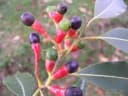
Ocotea puberula
Ocotea puberula
Safety & Hazards
None known
Cultivation Details
Prefers a sunny position[1]. Succeeds in virtually all soil types[1]. Newly planted young trees grow away rapidly[1]. A dioecious species, both male and female forms need to be grown if fruit and seed are required.
Propagation
Seed - best sown as soon as it is ripe. The whole fruit can be sown, it is not necessary to remove the pulp[1]. Sow in a semi-shaded seedbed. Germination can be quite variable and erratic, with some seed sprouting within 20 days and others taking 150 days. Around 75% germination rates can be expected[2]. Prick out the seedlings into individual containers once they are 4 - 6cm tall, they should be ready to plant out in permanent positions 5 - 7 months later[1]. Cite as: Tropical Plants Database, Ken Fern. tropical.theferns.info. 2026-02-20. <tropical.theferns.info/viewtropical.php?id=Ocotea+puberula>
Pollinators
Data unavailable
References
- [1]Brazilian Trees. Volume 1. 4th Edition. — Lorenzi. H. · Instituto Plantarum De Estudos Da Flora; Brazil. · 2002 · ISBN 85-86714-17-8 ↩︎Information on 350 species of Brazilian trees. Stunning photographs of each species, brief details on the plant, its uses and how to grow it from seed. A superb work, with the minor irritation that the translation from Portuguese is not of the best.
- [2]Flora Parana — http://www.chaua.org.br/pagina/floraparana-catalogo-plantas-nativas-do-parana ↩︎Not quite a flora, but an on-line listing of many of the plants of Parana in southern Brazil. Good photographs, plus descriptions and details of plant uses.
- [3]Flora of Costa Rica — Standley P.C. · Field Museum of Natural History; Chicago · 1938 · http://www.archive.org/ ↩︎Rather dated, but an excellent treatment of the area. Available for download from the internet.
- [4]IUCN Red List of Threatened Species — http://www.iucnredlist.org/ ↩︎A list of plants under threat and facing possible extinction, usually with brief details of the threats and information on habitat.