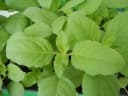
Ocimum tenuiflorum
Ocimum tenuiflorum
Safety & Hazards
None known
Cultivation Details
Ocimum tenuiflorum is a plant of the moist to wet, lowland tropics, where it is found at elevations up to 1,000 metres. It grows best in areas where annual daytime temperatures are within the range 20 - 28°c, but can tolerate 15 - 35°c[1]. When dormant, the plant can survive temperatures down to about -1°c[1]. It prefers a mean annual rainfall in the range 1,000 - 3,000mm, but tolerates 700 - 7,600mm[1]. Prefers a moist but well-drained soil in a sunny position[2]. Prefers a rich, light, well-drained to dry soil and a position in full sun[3]. Prefers a pH in the range 6 - 7.5, tolerating 5 - 9[1]. Cool, humid, overcast weather causes the plants to succumb to grey mould[1]. All parts of the plant are sweetly scented[4]. The twigs can be harvested only one month after planting out the young plants, and thereafter at periods of every two weeks during the growing season[1]. The plant attains full bloom stage (maturity) 65 - 70 days after transplanting[1]. There are several named varieties[5].
Propagation
Seed - Cite as: Tropical Plants Database, Ken Fern. tropical.theferns.info. 2026-02-20. <tropical.theferns.info/viewtropical.php?id=Ocimum+tenuiflorum>
Pollinators
Data unavailable
References
- [1]Ecocrop — http://ecocrop.fao.org/ecocrop/srv/en/home ↩︎Basic information on a wide range of useful plants, plus details of environmental needs where available.
- [2]Tropical Ornamentals; A Guide — Whistler. W. Arthur. · Timber Press Inc. Oregon. · 2000 · ISBN 0-88192-448-2 ↩︎An excellent little guide to some of the more commonly cultivated ornamental plants of the Tropics, often giving some information on the plants other uses.
- [3]Encyclopaedia of Herbs and their Uses. — Bown. D. · Dorling Kindersley, London. · 1995 · ISBN 0-7513-020-31 ↩︎A very well presented and informative book on herbs from around the globe. Plenty in it for both the casual reader and the serious student. Just one main quibble is the silly way of having two separate entries for each plant.
- [4]Medicinal Plants in Vietnam — Nguyen Van Dan & Doan Thi Nhu · World Health Organisation · 1989 · ISBN 92 9061 101 4 ↩︎An excellent book, giving information on over 200 plants, their medicinal compounds and applications.
- [5]Cornucopia II — Facciola. S. · Kampong Publications, California. · 1998 · ISBN 0-9628087-2-5 ↩︎The second edition of an excellent guide to the edible uses of plants, though it does not give any details of cultivation etc.
- [6]Plant Resources of Southeast Asia — http://proseanet.org/ ↩︎Lots of information on the uses of the plants of SE Asia.
- [7]The Encyclopedia of Medicinal Plants — Chevallier. A. · Dorling Kindersley. London · 1996 · ISBN 9-780751-303148 ↩︎An excellent guide to over 500 of the more well known medicinal herbs from around the world.
- [8]Plants and People of Nepal — Manandhar. N. P. · Timber Press. Oregon. · 2002 · ISBN 0-88192-527-6 ↩︎Excellent book, covering over 1,500 species of useful plants from Nepal together with information on the geography and peoples of Nepal. Good descriptions of the plants with terse notes on their uses.
- [9]Medicinal Plants of the Guianas — DeFilipps, R. A.; Maina, S. L.; & Crepin, J. · Smithsonian Museum · http://botany.si.edu/bdg/medicinal/index.html ↩︎A down-loadable PDF document of a book in pre-publication awaiting illustration. An excellent, if rather terse, guide to the traditional medicinal uses of the plants of the region