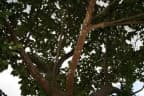
Ochroma pyramidale
Ochroma pyramidale
Safety & Hazards
None known
Cultivation Details
A plant of the lowland humid tropics, also succeeding at elevations up to 1,000 metres[1]. It grows best in areas where annual daytime temperatures are within the range 18 - 35°c, but can tolerate 15 - 38°c[2]. When dormant, the plant can survive temperatures down to about 5°c[2]. It prefers a mean annual rainfall in the range 2,500 - 3,000mm, but tolerates 1,500 - 4,000mm[2]. It can tolerate a dry season of up to 4 months, but only if the relative humidity does not normally drop below 75%[1]. Prefers a deep, fertile, moisture-retentive but well-drained soil in a sunny position[1, 3]. Prefers a pH in the range 5.5 - 6.5, tolerating 5 - 8[2]. Plants are very tolerant of salt-laden winds[3]. A very fast-growing, but short-lived tree[4]. It can reach a height of 20 metres, with a bole diameter of up to 60cm within 7 years and has been known to grow even faster on very rich soils[4]. Trees can commence flowering and producing viable seeds when 3 - 4 years old[2]. They can flower and produce seed all year round[5]. Trees usually reach maturity when about 12 - 15 years old, after which they deteriorate rapidly, growth slows, the heartwood becomes waterlogged and doty (not sure what this means; it might be based on dotage - becoming old and senile[PFAF]), and the new growth is hard and heavy[4]. Annual wood production potential is 17 - 30 cubic metres per hectare[2]. The tree is highly sensitive to fire damage[2].
Propagation
Seed - needs high temperatures to germinate[6]. Seeds can be sown directly in the field or in the nursery[1]. Freshly collected seed has only 10% germination[1]. Seeds contain an impervious testa which must be ruptured by heat (boiling water, fire) before they will germinate[1]. Under natural conditions forest clearance exposes the soil to the sun and this triggers germination of Ochroma seeds. In the nursery seeds are sown in lines 3 - 4cm apart under slight shade and in sterilized soil to prevent damping-off. Pre-treated seeds show 65 - 75% germination in 6 - 28 days and seedlings are pricked out and transferred to containers[1]. The very small seeds should be collected from standing trees, and can be stored for several years in jute bags or in closed containers[5]. Cite as: Tropical Plants Database, Ken Fern. tropical.theferns.info. 2026-02-20. <tropical.theferns.info/viewtropical.php?id=Ochroma+pyramidale>
Pollinators
Bats, Birds
References
- [1]World Agroforesty Centre — http://www.worldagroforestry.org/ ↩︎An excellent online database of a huge range of trees giving very good information on each plant - its uses, ecology, identity, propagation, pests etc.
- [2]Ecocrop — http://ecocrop.fao.org/ecocrop/srv/en/home ↩︎Basic information on a wide range of useful plants, plus details of environmental needs where available.
- [3]Tropical and Subtropical Trees - A Worldwide Encyclopaedic Guide. — Barwick. M. · Thames & Hudson, London · 2004 · ISBN 0-500-51181-0 ↩︎A superb book, very concise and well written, giving a wealth of information on 400 or more species including descriptions, habitat, cultivation details and plant uses. A wealth of colour photographs bring each plant vividly to life.
- [4]Present and Potential Commercial Timbers of the Caribbean — Longwood.F.R. · USDA Forest Service; Washington, DC. · 1962 ↩︎Quite detailed information on more than 60 species of Caribbean timber trees, giving species descriptions, habitat, detailed info on the wood and some info on other uses. Available for download on the internet.
- [5]Protabase - Plant Resources of Tropical Africa. — http://www.prota.org ↩︎An excellent on-line database with detailed information on over 3,200 species of useful plants of Africa.
- [6]The New RHS Dictionary of Gardening. 1992. — Huxley. A. · MacMillan Press · 1992 · ISBN 0-333-47494-5 ↩︎Excellent and very comprehensive, though it contains a number of silly mistakes. Readable yet also very detailed.
- [7]Tree Species of Panama — http://ctfs.arnarb.harvard.edu/webatlas/mainframe.php?order=s ↩︎Factsheets on all the tree and shrub species of Panama, giving identification guide, brief guide to the species and some uses. A vast, but rather incomplete work as of 15/07/09.
- [8]Flora of Barro Colorado Island — Croat. Thomas B. · Stanford University Press · 1978 · http://biogeodb.stri.si.edu/bioinformatics/croat/home · ISBN 0-8047-0950-5 ↩︎A very good flora of an area in Panama. Written some years ago, so some of the names have been changed. The book is out of print, but the whole flora is now available on the web.
- [9]Medicinal Plants of Brazil — Mors W.B.; Rizzini C.T.; Pereira N.A. · Reference Publications; Michigan. · 2000 · ISBN 0-917256-42-5 ↩︎An extremely concise book, listing approximately 1,500 species and varieties of plants with their botanical name, common name in Brazil, regions in Brazil where the plant is found, a brief list of uses and any medically active compounds in the plant.
- [10]Useful Plants of the Siona and Secoya Indians of Eastern Ecuador. — Vickers W.T.; Plowman T. · Field Museum of Natural History; USA. · 1984 · http://www.biodiversitylibrary.org · ISBN 0015 - 0746 ↩︎Very terse, but it gives the uses of a large number of species. It can be downloaded from the Internet.
- [11]Tropix 7 — CIRAD · http://tropix.cirad.fr/en ↩︎An on-line guide to the timbers of 245 species of trees.
- [PFAF]Plants for a Future — pfaf.org ↩︎