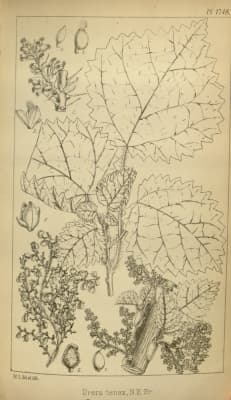
Urticaceae FAMILY
Obetia tenax
Obetia tenax
Edibility
2/5
Medicinal
2/5
Safety & Hazards
Contact with the stinging hairs causes intense itching and burning, and may result in blisters on the skin[1].
Cultivation Details
HabitTree
Growth—
Grows best in a sunny position[2]. Prefers a moist but well-drained soil[2]. A moderately fast-growing plant[3]. This species is presumed to be dioecious, in which case both male and female forms need to be grown if fruit and seed are required[1, 4].
Propagation
Seed - The plant is easily propagated[3]. Cite as: Tropical Plants Database, Ken Fern. tropical.theferns.info. 2026-02-20. <tropical.theferns.info/viewtropical.php?id=Obetia+tenax>
Pollinators
Data unavailable
References
- [1]Protabase - Plant Resources of Tropical Africa. — http://www.prota.org ↩︎An excellent on-line database with detailed information on over 3,200 species of useful plants of Africa.
- [2]Bihrmann's Caudiciforms — http://www.bihrmann.com/caudiciforms/ ↩︎An internet site giving information on caudiciform plants (plants with swollen stem bases such as the Baobab tree, cycads and many succulents). Excellent photos, usually of cultivated plants in pots.
- [3]Useful Fiber Plants of the World — Dodge C.R. · USDA; Washington. · 1897 · http://www.biodiversitylibrary.org/ ↩︎A rather dated, but very comprehensive catalogue of fibre plants from around the world. The book can be downloaded from the Internet.
- [4]Flora Zambesiaca — http://apps.kew.org/efloras/fz/intro.html ↩︎An excellent online flora of plants from the Zambezi River basin. It lists a number of the plant uses as well as the habitats and botanical descriptions of the plants.