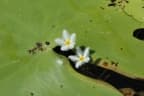
Menyanthaceae FAMILY
Nymphoides indica
Nymphoides indica
Edibility
2/5
Medicinal
0/5
Safety & Hazards
None known
Cultivation Details
HabitEvergreen Perennial
Growth—
Succeeds in full sun and partial shade[1]. Prefers a rich, sandy loam[1]. Plants grow best when the roots are submerged in 30 - 60cm of water[1]. The plant can spread rather vigorously when growing in areas with warm winters[1]. It has become naturalized in southern Florida[1]. Individual flowers only live for one day[1].
Propagation
Seed - Plantlets are formed at the leaves and can be used for propagation. Cite as: Tropical Plants Database, Ken Fern. tropical.theferns.info. 2026-02-20. <tropical.theferns.info/viewtropical.php?id=Nymphoides+indica>
Pollinators
Data unavailable
References
- [1]KemperCentreForHomeGardeningPlantFinder — Missouri Botanical Garden · http://www.mobot.org/gardeninghelp/plantfinder/ ↩︎Basic cultivation details, plant uses, habitat etc for several thousand species of plants, mainly from the temperate zone.
- [2]Flora Vitiensis Nova — Smith. A.C. · Pacific Tropical Botanical Garden; Hawaii · 1979 · http://www.biodiversitylibrary.org ↩︎A comprehensive flora of Fiji, often showing plant uses. It can be downloaded from the Internet.
- [3]Cornucopia II — Facciola. S. · Kampong Publications, California. · 1998 · ISBN 0-9628087-2-5 ↩︎The second edition of an excellent guide to the edible uses of plants, though it does not give any details of cultivation etc.
- [4]Medicinal Plants of the Guianas — DeFilipps, R. A.; Maina, S. L.; & Crepin, J. · Smithsonian Museum · http://botany.si.edu/bdg/medicinal/index.html ↩︎A down-loadable PDF document of a book in pre-publication awaiting illustration. An excellent, if rather terse, guide to the traditional medicinal uses of the plants of the region