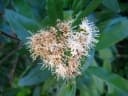
Nuxia oppositifolia
Nuxia oppositifolia
Safety & Hazards
None known
Cultivation Details
A plant of the tropics and the subtropics, where it can be found at elevations up to 2,400 metres[1]. The plant is reasonably tolerant of short-lived frosts[2]. Succeeds in ordinary garden soils, but will grow better if it grows close to water[2]. The leaves are often slightly sticky when young[2]. The plant can grow quite quickly in reasonably fertile soils with sufficient moisture[2].
Propagation
Seed - difficult to obtain, but it should be sown in seed trays on a fine seedling mix. Cover lightly and do not allow to dry out. Avoid overhead watering as the seed is fine and will wash away. Instead place the tray in a clean, shallow container of water and allow the water to soak in to the tray from below. Once the surface is wet remove the tray from the water. Transplant the seedlings to individual containers once they have formed their true leaves[2]. Cuttings of half-ripe wood[2]. Cite as: Tropical Plants Database, Ken Fern. tropical.theferns.info. 2026-02-20. <tropical.theferns.info/viewtropical.php?id=Nuxia+oppositifolia>
Pollinators
Data unavailable
References
- [1]Flora Zambesiaca — http://apps.kew.org/efloras/fz/intro.html ↩︎An excellent online flora of plants from the Zambezi River basin. It lists a number of the plant uses as well as the habitats and botanical descriptions of the plants.
- [2]PlantZAfrica.com — http://www.plantzafrica.com ↩︎An excellent site giving detailed descriptions and uses of many S. African plants.
- [3]Field Guide to the Moist Forest Trees of Tanzania. — Lovett J.C.; Ruffo C.K.; Gereau R.E.; Taplin J.R.D · Frontier · http://www.york.ac.uk/res/celp/webpages/projects/ecology/tree%20guide/introduction.htm · ISBN 1-873070-33-0 ↩︎A lovely little book giving a basic identification guide to more than 650 species of trees growing in Tanzania. It is also available to view on the internet.