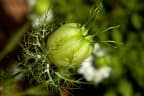
Nigella sativa
Nigella sativa
Safety & Hazards
None known
Cultivation Details
Nigella sativa is a plant of the subtropics, it can also be cultivated in the temperate zone and at higher elevations from 1,500 - 2,500 metres in the tropics[1]. It grows best in areas where annual daytime temperatures are within the range 14 - 26°c, but can tolerate 5 - 30°c[1]. It prefers a mean annual rainfall in the range 600 - 800mm, but tolerates 400 - 1,000mm[1]. Easily grown in any good garden soil, preferring a sunny position[2, 3]. Prefers a light soil in a warm position[4]. Prefers a pH in the range 6.5 - 7.3, tolerating 6 - 8[1]. Plants commence flowering about 100 days after sowing the seed, with mature seed being ready to harvest 50 days later[5]. The seed is aromatic with a nutmeg scent[6]. A greedy plant, inhibiting the growth of nearby plants, especially legumes[7].
Propagation
Seed - sow spring or early autumn in situ[2]. The autumn sowing might not be successful in harsh winters. Plants can be transplanted if necessary[8]. Cite as: Temperate Plants Database, Ken Fern. temperate.theferns.info. 2026-02-21. <temperate.theferns.info/plant/Nigella+sativa>
Pollinators
Bees, Self
References
- [1]Ecocrop — http://ecocrop.fao.org/ecocrop/srv/en/home ↩︎Basic information on a wide range of useful plants, plus details of environmental needs where available.
- [2]RHS Dictionary of Plants plus Supplement. 1956 — F. Chittendon. · Oxford University Press · 1951 · ISBN - ↩︎Comprehensive listing of species and how to grow them. Somewhat outdated, it has been replaced in 1992 by a new dictionary (see [ 200 ]).
- [3]Garden Plants Valuable to Bees. — International Bee Research Association. · International Bee Research Association. · 1981 · ISBN - ↩︎The title says it all.
- [4]The Gardener's Assistant. — Thompson. B. · Blackie and Son. · 1878 · ISBN - ↩︎Excellent general but extensive guide to gardening practices in the 19th century. A very good section on fruits and vegetables with many little known species.
- [5]Plant Resources of Southeast Asia — http://proseanet.org/ ↩︎Lots of information on the uses of the plants of SE Asia.
- [6]Scented Flora of the World. — Genders. R. · Robert Hale. London. · 1994 · ISBN 0-7090-5440-8 ↩︎An excellent, comprehensive book on scented plants giving a few other plant uses and brief cultivation details. There are no illustrations.
- [7]How to Enjoy your Weeds. — Hatfield. A. W. · Frederick Muller Ltd · 1977 · ISBN 0-584-10141-4 ↩︎Interesting reading.
- [8]The New RHS Dictionary of Gardening. 1992. — Huxley. A. · MacMillan Press · 1992 · ISBN 0-333-47494-5 ↩︎Excellent and very comprehensive, though it contains a number of silly mistakes. Readable yet also very detailed.
- [9]Sturtevant's Edible Plants of the World. — Hedrick. U. P. · Dover Publications · 1972 · ISBN 0-486-20459-6 ↩︎Lots of entries, quite a lot of information in most entries and references.
- [10]Edible and Medicinal Plants. — Launert. E. · Hamlyn · 1981 · ISBN 0-600-37216-2 ↩︎Covers plants in Europe. a drawing of each plant, quite a bit of interesting information.
- [11]A Modern Herbal. — Grieve. · Penguin · 1984 · ISBN 0-14-046-440-9 ↩︎Not so modern (1930's?) but lots of information, mainly temperate plants.
- [12]Flora of the USSR. — Komarov. V. L. · Israel Program for Scientific Translation · 1968 · http://www.biodiversitylibrary.org · ISBN - ↩︎An immense (25 or more large volumes) and not yet completed translation of the Russian flora. Full of information on plant uses and habitats but heavy going for casual readers. It can be downloaded from the Internet.
- [13]Flowers of Europe - A Field Guide. — Polunin. O. · Oxford University Press · 1969 · ISBN 0192176218 ↩︎An excellent and well illustrated pocket guide for those with very large pockets. Also gives some details on plant uses.
- [14]Cornucopia - A Source Book of Edible Plants. — Facciola. S. · Kampong Publications · 1990 · ISBN 0-9628087-0-9 ↩︎Excellent. Contains a very wide range of conventional and unconventional food plants (including tropical) and where they can be obtained (mainly N. American nurseries but also research institutes and a lot of other nurseries from around the world.
- [15]Dictionary of Economic Plants. — Uphof. J. C. Th. · Weinheim · 1959 · ISBN - ↩︎An excellent and very comprehensive guide but it only gives very short descriptions of the uses without any details of how to utilize the plants. Not for the casual reader.
- [16]Encyclopaedia of Herbs and their Uses. — Bown. D. · Dorling Kindersley, London. · 1995 · ISBN 0-7513-020-31 ↩︎A very well presented and informative book on herbs from around the globe. Plenty in it for both the casual reader and the serious student. Just one main quibble is the silly way of having two separate entries for each plant.
- [17]The Encyclopedia of Medicinal Plants — Chevallier. A. · Dorling Kindersley. London · 1996 · ISBN 9-780751-303148 ↩︎An excellent guide to over 500 of the more well known medicinal herbs from around the world.
- [18]Glossary of Indian Medicinal Plants (Including the Supplement). — Chopra. R. N., Nayar. S. L. and Chopra. I. C. · Council of Scientific and Industrial Research, New Delhi. · 1986 · ISBN - ↩︎Very terse details of medicinal uses of plants with a wide range of references and details of research into the plants chemistry. Not for the casual reader.