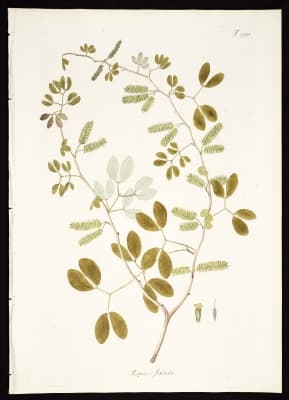
Microlobius foetidus
Microlobius foetidus
Safety & Hazards
None known
Cultivation Details
Grows best in a sunny position[1]. Found in the wild on alkaline clay soils[1]. Young plants have a moderate rate of growth, able to reach a height of 2 metres or more within 2 years from seed[1]. Plants regrow freely from the base if cut down or burnt[1]. The branches, leaves and seeds have a strong garlic smell which is more apparent in hot weather[1]. This species has a symbiotic relationship with certain soil bacteria; these bacteria form nodules on the roots and fix atmospheric nitrogen. Some of this nitrogen is utilized by the growing plant but some can also be used by other plants growing nearby[2].
Propagation
Seed - it has a hard seedcoat and benefits from scarification before sowing to speed up and improve germination. This can usually be done by pouring a small amount of nearly boiling water on the seeds (being careful not to cook them!) and then soaking them for 12 - 24 hours in warm water. By this time they should have imbibed moisture and swollen - if they have not, then carefully make a nick in the seedcoat (being careful not to damage the embryo) and soak for a further 12 hours before sowing. Sow the treated seed in a sunny position in a nursery seedbed. A virtually 100% germination rate can be expected from treated seeds, with the seed sprouting within 7 - 14 days[1]. Cite as: Tropical Plants Database, Ken Fern. tropical.theferns.info. 2026-02-20. <tropical.theferns.info/viewtropical.php?id=Microlobius+foetidus>
Pollinators
Insects, Bees
References
- [1]Brazilian Trees. Volume 2. 4th Edition. — Lorenzi. H. · Instituto Plantarum De Estudos Da Flora; Brazil. · 2002 · ISBN 85-86714-15-1 ↩︎Information on 350 species of Brazilian trees. Stunning photographs of each species, brief details on the plant, its uses and how to grow it from seed. A superb work, with the minor irritation that the translation from Portuguese is not of the best.
- [2]Nodulation Plants in GRIN Taxonomy — United States Department of Agriculture · http://www.ars-grin.gov/~sbmljw/cgi-bin/taxnodul.pl?language=en ↩︎An online database listing plants that have either positive or negative reports on root and stem nodulation with nitrogen-fixing bacteria.