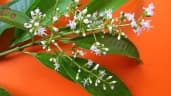
Miconia prasina
Miconia prasina
Safety & Hazards
None known
Cultivation Details
A plant of the moist tropics, where it can be found at elevations up to 1,500 metres. It grows in areas where the mean annual rainfall is within the range 1,600 - 3,500mm[1]. Requires a sunny position[1]. The plant grows wild in loamy and clayey soils that are derived from both sedimentary and igneous rocks - most of these soils have anaerobic subsoils[1]. The tree has a moderate rate of growth and is relatively short-lived, especially if it becomes shaded[1]. The plant sometimes flowers and produces fruit almost all year round[2, 1]. Plants respond well to coppicing[2].
Propagation
Seed - it is very small. When surface sown on wet peat, 57% of the seed germinated within 20 - 63 days[1]. The seedlings are tiny and difficult to handle[1]. Suckers. Layering. Cite as: Tropical Plants Database, Ken Fern. tropical.theferns.info. 2026-02-20. <tropical.theferns.info/viewtropical.php?id=Miconia+prasina>
Pollinators
Bees, Insects
References
- [1]Wildland Shrubs of the United States and its Territories: Thamnic Descriptions — Francis J.K. (Editor) · USDA; Forest Service International Institute of Tropical Forestr · 2000 · http://www.fs.fed.us/global/iitf/wildland_shrubs.htm ↩︎An excellent series of papers, in PDF format, from various authors giving quite detailed information on a range of shrubs growing in the United States and its Territories. It can be downloaded from the Internet.
- [2]Flowering Plants of Jamaica — Adams. C.D. · University of the West Indies; Jamaica. · 1972 ↩︎A terse treatment of the flowering plants of Jamaica, with a botanical description of each plant, notes on habitat etc.
- [3]Fruits of the Guianan Flora — van Roosmalen. M.G.M. · Institute of Systematic Boyany, Utrecht University; Netherlands. · 1985 · ISBN 90-9000988-4 ↩︎Terse descriptions of over 1,700 species from the Guianas that bear fruits - not necessarily edible! Often mentions if the fruit is edible, plus gives brief description of habit and habitat.
- [4]Woods of Northeastern Peru — Williams L. · Field Museum Press; Chicago. · 1936 · http://www.biodiversitylibrary.org/ ↩︎Gives information on the properties of the wood of well over 1,000 species of woody plants from northeastern Peru. Can be downloaded from the Internet.
- [5]Perennial Edible Fruits of the Tropics : an Inventory — Martin, F. W.; Campbell, C. W.; Rubertbe, R. M. · U.S. Dept. of Agriculture, Agricultural Research Service · 1987 ↩︎A booklet giving terse details of almost 300 species of edible fruits, plus regional lists of Botanical and Common names for over 2,500 less well-known edible fruits of the tropics.
- [6]Timbers of British Guiana — Stone H.: Freeman W.G. · The Crown Agents for the Colonies: London. · 1914 · http://www.biodiversitylibrary.org ↩︎A guide to the woods of Guiana, though there is no description of the plants. It can be downloaded from the Internet.
- [7]Medicinal Plants of the Guianas — DeFilipps, R. A.; Maina, S. L.; & Crepin, J. · Smithsonian Museum · http://botany.si.edu/bdg/medicinal/index.html ↩︎A down-loadable PDF document of a book in pre-publication awaiting illustration. An excellent, if rather terse, guide to the traditional medicinal uses of the plants of the region
- [8]Trees and Shrubs of Mexico — Standley P.C. · Smithsonian Institution; Washington · 1926 ↩︎Although dated, it contains a wealth of information on the trees and shrubs of Mexico, including many of their uses. It can be downloaded from the Internet.