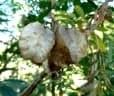
Melianthus comosus
Melianthus comosus
Safety & Hazards
The plant is widely held to be toxic amongst traditional herbalists in S. Africa, where the plant is used in external medicinal applications[1].
Cultivation Details
A plant of drier areas, mainly in the subtropics, but extending into the tropical zone. Prefers a light, well-drained, fertile soil[2]. The bruised leaves have a disagreeable smell[3].
Propagation
Seed - Easily propagated from seed, which is large, black and easy to handle[2]. Sow the seed when it is ripe in deep seed trays in a medium of compost only[2]. When sowing seed in the colder months, germination may take about four weeks[2]. Cover the seeds, keep them moist, leave the seedlings in the trays until the fourth leaf stage. Transplant into a medium of 2 parts compost and 2 parts loam[2]. Cite as: Tropical Plants Database, Ken Fern. tropical.theferns.info. 2026-02-20. <tropical.theferns.info/viewtropical.php?id=Melianthus+comosus>
Pollinators
Birds
References
- [1]Pharmaceutical monographs for 60 South African plant species — Scott, G. and Springfield, E.P. · 2004 · http://www.plantzafrica.com/medmonographs ↩︎A series of 60 monographs of S. African medicinal plants. Well written, with information on traditional uses and modern research into the plants.
- [2]PlantZAfrica.com — http://www.plantzafrica.com ↩︎An excellent site giving detailed descriptions and uses of many S. African plants.
- [3]BoDD (Botanical Dermatology Database) — http://bodd.cf.ac.uk/ ↩︎Brief notes on a very wide range of plants that have reports of causing harm to the skin.
- [4]IUCN Red List of Threatened Species — http://www.iucnredlist.org/ ↩︎A list of plants under threat and facing possible extinction, usually with brief details of the threats and information on habitat.
- [5]Trees of Sungai Wain — http://www.nationaalherbarium.nl/Sungaiwain/ ↩︎An excellent site with factsheets on almost 1,000 species of forest trees growing at Sungai Wain in Indonesia. Each factsheet has good quality pictures plus basic information on the ecology and uses of the plants.