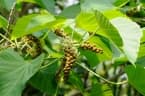
Melanolepis multiglandulosa
Melanolepis multiglandulosa
Safety & Hazards
None known
Cultivation Details
Often found in the wild on poorly drained and/or temporary inundated: alluvial sand, clay, vulcanic soil, coral (sand), red loam; Andesite bedrock[1]. This species is considered to be monoecious, but usually inflorescences of only one sex can be found on any plant at any one time. It is not known whether both sexes can occur at the same time on the same plant or not[1]. A distinct flowering or fruiting season is unknown; flowering and fruiting specimens may be encountered during the whole year[2, 1]. Leaves can be collected all year round, except in drier areas where the plants may be deciduous and leaves can only be collected in the wet season[2].
Propagation
Seed - it shows canopy-induced facultative dormancy, but it germinates readily under sunny conditions, completing germination within 5 weeks[2]. Cite as: Tropical Plants Database, Ken Fern. tropical.theferns.info. 2026-02-20. <tropical.theferns.info/viewtropical.php?id=Melanolepis+multiglandulosa>
Pollinators
Data unavailable
References
- [1]Euphorbiaceae of Malesia — http://www.nationaalherbarium.nl/euphorbs/ ↩︎An online resource that is still being developed, it gives detailed botanical descriptions of plants in the family Euphorbiaceae found growing in Malesia (the region from Peninsual Malaysia through Indonesia, the Philippines).
- [2]Plant Resources of Southeast Asia — http://proseanet.org/ ↩︎Lots of information on the uses of the plants of SE Asia.
- [3]Shade Plants for Garden and Woodland. — Brown. ↩︎,
- [4]Philippine Medicinal Plants — http://www.stuartxchange.org/CompleteList.html ↩︎A lovely site, giving brief details on the medicinal uses of several hundred (over 400 at the last count) plants in the Philippines, plus a picture of each plant.