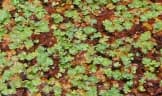
Marsilea drummondii
Marsilea drummondii
Safety & Hazards
Although we have found no reports of toxicity for this species, a number of ferns contain carcinogens so some caution is advisable[1]. The sporocarps of this species also contain thiaminase, an enzyme that robs the body of vitamin B1. In small quantities this enzyme will do no harm to people eating an adequate diet that is rich in vitamin B, though large quantities can cause severe health problems. Fairly resistant to heat, the quantity of enzyme can be greatly reduced by thoroughly drying or cooking the plant[2, 3].
Cultivation Details
Plants are hardy to about -7°c in Australian gardens[4], though this cannot be translated directly to British gardens due to our cooler summers and longer, colder and wetter winters[PFAF]. A highly polymorphic species[3]. Most species produce sporocarps as their habitat dries. Spores of some species retain viability within the sporocarp for nearly 70 years; thus species can survive in areas of infrequent rainfall[3].
Propagation
Spores. The plant produces sporocarps, these need to be lightly abraded and then immersed in water. The sporocarps will then swell and burst to release the spores. The spores germinate immediately, the highly developed prothallus remains inside the large seed-like spores. The gametophyte generation is completed in 24 hours and the first roots and shoots appear in 2 - 3 days. Mature plants bearing sporocarps can develop in as little as 3 months[1]. Spore germination in the family occurs after rupture of the sporocarp wall allows the sporocarp contents to be hydrated. A gelatinous structure emerges from the sporocarp, breaking it into valves and carrying the sori into the water. Spore germination (gametophyte growth) and fertilization occur immediately[5]. Division. Cite as: Temperate Plants Database, Ken Fern. temperate.theferns.info. 2026-02-21. <temperate.theferns.info/plant/Marsilea+drummondii>
Pollinators
Data unavailable
References
- [1]The New RHS Dictionary of Gardening. 1992. — Huxley. A. · MacMillan Press · 1992 · ISBN 0-333-47494-5 ↩︎Excellent and very comprehensive, though it contains a number of silly mistakes. Readable yet also very detailed.
- [2]Discovering Wild Plants - Alaska, W. Canada and the Northwest. — Schofield. J. J. · Alaska Northwest Books; Alaska · 2003 · ISBN 0882403699 ↩︎A nice guide to some useful plants in that area.
- [3]Flora of Australia — http://www.anbg.gov.au/abrs/abif/flora/ ↩︎The full information from the Flora of Australia - on-line. An excellent resource.
- [4]Australian Native Plants. — Wrigley. J. W. and Fagg. M. · Collins. (Australia) · 1988 · ISBN 0-7322-0021-0 ↩︎A lovely book, written in order to encourage Australian gardeners to grow their native plants. A little bit of information for the plant project.
- [5]Flora of N. America — http://flora.huh.harvard.edu/fna/ ↩︎An on-line version of the flora with an excellent description of the plant including a brief mention of plant uses.
- [6]Flora of Victoria. — Ewart. A. J. · University Press; Melbourne · 1930 ↩︎A flora of eastern Australia, it is rather short on information that is useful to the plant project.
- [7]Wild Food in Australia. — Cribb. A. B. and J. W. · Fontana · 1976 · ISBN 0-00-634436-4 ↩︎A very good pocket guide.
- [PFAF]Plants for a Future — pfaf.org ↩︎