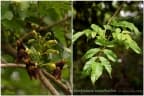
Markhamia zanzibarica
Markhamia zanzibarica
Safety & Hazards
None known
Cultivation Details
A plant of the subtropical to tropical areas of the drier tropics. It can tolerate occasional light frosts, but is very sensitive to severe frost and cold[1]. Prefers a warm, sunny position in a well-drained, fertile soil[1]. Plants grow back quickly after being cut, so should coppice well[2].
Propagation
Seed - sow in a nursery seedbed or individual containers and only just cover the seed. Germination usually takes place within 3 weeks. Prick out the seedlings into individual containers as soon as they are large enough to handle and plant out when 25cm or more tall. Cuttings can be taken of quite long branches, planting directly into the soil at the beginning of the wet season. Cite as: Tropical Plants Database, Ken Fern. tropical.theferns.info. 2026-02-20. <tropical.theferns.info/viewtropical.php?id=Markhamia+zanzibarica>
Pollinators
Ants
References
- [1]PlantZAfrica.com — http://www.plantzafrica.com ↩︎An excellent site giving detailed descriptions and uses of many S. African plants.
- [2]Flora of Tropical East Africa — Beentje H.J. · Royal Botanic Gardens; Kew. · 2002 · http://plants.jstor.org/search?st=396814 ↩︎Available on-line, a modern flora of East Africa.
- [3]Flora Zambesiaca — http://apps.kew.org/efloras/fz/intro.html ↩︎An excellent online flora of plants from the Zambezi River basin. It lists a number of the plant uses as well as the habitats and botanical descriptions of the plants.
- [4]Field Guide to the Moist Forest Trees of Tanzania. — Lovett J.C.; Ruffo C.K.; Gereau R.E.; Taplin J.R.D · Frontier · http://www.york.ac.uk/res/celp/webpages/projects/ecology/tree%20guide/introduction.htm · ISBN 1-873070-33-0 ↩︎A lovely little book giving a basic identification guide to more than 650 species of trees growing in Tanzania. It is also available to view on the internet.
- [5]IUCN Red List of Threatened Species — http://www.iucnredlist.org/ ↩︎A list of plants under threat and facing possible extinction, usually with brief details of the threats and information on habitat.