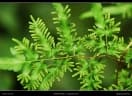
Lygodium japonicum
Lygodium japonicum
Safety & Hazards
Although we have found no reports of toxicity for this species, a number of ferns contain carcinogens so some caution is advisable[1]. Many ferns also contain thiaminase, an enzyme that robs the body of its vitamin B complex. In small quantities this enzyme will do no harm to people eating an adequate diet that is rich in vitamin B, though large quantities can cause severe health problems. The enzyme is destroyed by heat or thorough drying, so cooking the plant will remove the thiaminase[2].
Cultivation Details
A plant of low to moderate elevations in the tropics, where it can be found at elevations up to 2,550 metres[3]. The plant only grows wild in areas with a pronounced dry season[3]. The roots can be planted in a shady position, allowing the plant to climb up into the sun[1]. Prefers a neutral to slightly acid soil[1]. Once established in a community, the plant displaces native species and alters local fire ecology because its stems act as a ladder for fires, leading to greater incidence of crown fire in forest communities that are ill-adapted to crown fire[4]. Given enough time, it can completely dominate a native habitat causing the collapse of the natural community. It is the reproductive strategy of the plant, or intragametophytic selfing, combined with the ease with which spores are wind dispersed which allows this fern to spread and proliferate rapidly. It has also been determined that the plant is hardier than native Florida species in low light environments, allowing it to thrive and expand when natives cannot[4].
Propagation
Spores. Division. Serpentine layering. An actively growing frond is pinned down onto the soil surface at each node, where it may root and shoot out as a new plant[1]. Cite as: Tropical Plants Database, Ken Fern. tropical.theferns.info. 2026-02-20. <tropical.theferns.info/viewtropical.php?id=Lygodium+japonicum>
Pollinators
Self
References
- [1]The New RHS Dictionary of Gardening. 1992. — Huxley. A. · MacMillan Press · 1992 · ISBN 0-333-47494-5 ↩︎Excellent and very comprehensive, though it contains a number of silly mistakes. Readable yet also very detailed.
- [2]Discovering Wild Plants - Alaska, W. Canada and the Northwest. — Schofield. J. J. · Alaska Northwest Books; Alaska · 2003 · ISBN 0882403699 ↩︎A nice guide to some useful plants in that area.
- [3]Flora Malesiana Series 1 — Various · Nationaal Herbarium Nederiand, Universiteit Leiden branch · http://www.archive.org ↩︎A massive treatment of the plants of the Malaysian Archipelago. Much of it has been made available to download from the Internet
- [4]Global Invasive Species Database — http://www.issg.org/database/welcome/ ↩︎Very detailed information on almost 400 species (with more being added) of plants that have become weeds in areas outside their native range.
- [5]American Fern Journal Vol.60 — American Fern Society · 1970 · http://www.biodiversitylibrary.org ↩︎Contains an article on the medicinal uses of Indian ferns. It can be downloaded from the Internet.
- [6]Minor Products of Philippine Forests — Brown. W. H. · Bureau of Forestry, Manilla. · 1920 ↩︎A useful guide to some of the plants of the area, though terse on details. The book is out of copyright and can be legally downloaded from the Internet.