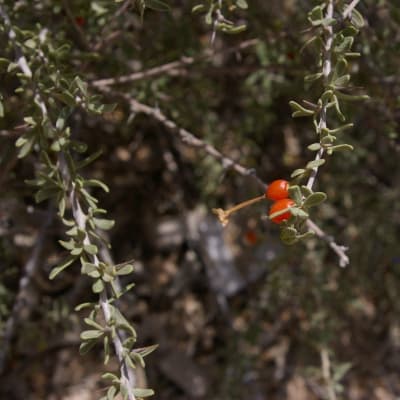
Solanaceae FAMILY
Lycium shawii
Lycium shawii
Edibility
2/5
Medicinal
2/5
Safety & Hazards
Although providing many well-known foods for people, including the potato, tomato, pepper and aubergine, most plants in the family Solanaceae also contain poisonous alkaloids. Unless there are specific entries with information on edible uses, it would be unwise to ingest any part of this plant[PFAF].
Cultivation Details
HabitShrub
Growth—
Grows wild on soils varying from clayey, loamy to halophytic[1]. The plant forms thick clumps and is reputed to harbour snakes and rats[2].
Propagation
Seed - Cuttings[2]. Cite as: Tropical Plants Database, Ken Fern. tropical.theferns.info. 2026-02-20. <tropical.theferns.info/viewtropical.php?id=Lycium+shawii>
Pollinators
Data unavailable
References
- [1]Flora Zambesiaca — http://apps.kew.org/efloras/fz/intro.html ↩︎An excellent online flora of plants from the Zambezi River basin. It lists a number of the plant uses as well as the habitats and botanical descriptions of the plants.
- [2]Edible Wild Plants of Tanzania — Ruffo, C.K.: Birnie, A. & Tengnas, B. · Regional Land Management Unit; Nairobi. · 2002 · ISBN 9966-896-60-0 ↩︎A very well presented, simple guide to growing and utilizing wild food plants in Tanzania, with line drawings of each plant, a description, habitat and range, non-food as well as food uses, plus basic information on growing the plants.
- [3]Protabase - Plant Resources of Tropical Africa. — http://www.prota.org ↩︎An excellent on-line database with detailed information on over 3,200 species of useful plants of Africa.
- [4]Flora of Somalia — Thulin M. (Editor) · Kew Publishing, London. · 1993 ↩︎Detailed information on the plants of the region, often adding notes on the plants uses.
- [PFAF]Plants for a Future — pfaf.org ↩︎