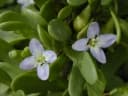
Lycium sandwicense
Lycium sandwicense
Safety & Hazards
Although providing many well-known foods for people, including the potato, tomato, pepper and aubergine, most plants in the family Solanaceae also contain poisonous alkaloids. Unless there are specific entries with information on edible uses, it would be unwise to ingest any part of this plant[PFAF].
Cultivation Details
A plant of lowland tropical areas. Requires a light, well-drained soil in a sunny position[1]. Established plants are drought tolerant[1]. Plants are tolerant of salt-laden winds[1]. Even though it is a true coastal plant, it can be planted at higher elevations in full sun and with proper drainage[1].
Propagation
Seed - Cite as: Tropical Plants Database, Ken Fern. tropical.theferns.info. 2026-02-20. <tropical.theferns.info/viewtropical.php?id=Lycium+sandwicense>
Pollinators
Data unavailable
References
- [1]Native Plants Hawaii — http://nativeplants.hawaii.edu/plant/ ↩︎A website containing information on a range of native Hawaiian plants, with descriptions, habitat, traditional uses etc.
- [2]Dictionary of Economic Plants. — Uphof. J. C. Th. · Weinheim · 1959 · ISBN - ↩︎An excellent and very comprehensive guide but it only gives very short descriptions of the uses without any details of how to utilize the plants. Not for the casual reader.
- [PFAF]Plants for a Future — pfaf.org ↩︎