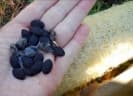
Luffa aegyptiaca
Luffa aegyptiaca
Safety & Hazards
None known
Cultivation Details
A plant of the lowland tropics, where it is found at elevations up to 1,000 metres. It can also be grown in subtropical and temperate areas so long as there is a growing season of 4 months or more[1]. It grows best in areas where annual daytime temperatures are within the range 23 - 27°c, but can tolerate 10 - 38°c[1]. It prefers a mean annual rainfall in the range 1,200 - 2,000mm, but tolerates 300 - 3,000mm[1]. Yields can be reduced in areas of heavy rain[2]. Prefers a position in full sun[3]. Plants succeed in poor soils, but fruit best in soils of moderate fertility[4]. Plants are most productive when grown in well-drained soils with a high content of organic matter[2]. Prefers a pH in the range 5.5 - 6.5, tolerating 4.3 - 8.3[1]. Plants can produce their first crop of immature fruits within 2 months from seed[4]. Mature fruits take 3 - 4 months to ripen[1]. Yields of up to 30 - 40 tonnes per hectare, or 20 - 25 fruits per plant, have been recorded[1]. Hand pollination of female flowers in the morning can increase yields[2]. There are some named varieties[2, 5].
Propagation
Seed - can be sown in situ or in containers[2]. When sowing in containers, place 2 - 3 seeds in each container, thinning to the best plant once they have germinated. Keep the plants growing quickly and plant out once they are 15cm or more tall. Cite as: Tropical Plants Database, Ken Fern. tropical.theferns.info. 2026-02-20. <tropical.theferns.info/viewtropical.php?id=Luffa+aegyptiaca>
Pollinators
Insects
References
- [1]Ecocrop — http://ecocrop.fao.org/ecocrop/srv/en/home ↩︎Basic information on a wide range of useful plants, plus details of environmental needs where available.
- [2]Vegetables in the Tropics — Tindall. H. D. · MacMillan, Oxford. · 1983 · ISBN 0-333-24268-8 ↩︎An excellent, in-depth look at the main vegetable crops that can be grown in the Tropics, plus many less well-known plants.
- [3]Encyclopaedia of Herbs and their Uses. — Bown. D. · Dorling Kindersley, London. · 1995 · ISBN 0-7513-020-31 ↩︎A very well presented and informative book on herbs from around the globe. Plenty in it for both the casual reader and the serious student. Just one main quibble is the silly way of having two separate entries for each plant.
- [4]Tropical Food Gardens — Norrington. L. · Bloomings Books (Melbourne) · 2001 · ISBN 1-876473-41-x ↩︎Excellent little book giving some basic information on a range of plants.
- [5]Cornucopia II — Facciola. S. · Kampong Publications, California. · 1998 · ISBN 0-9628087-2-5 ↩︎The second edition of an excellent guide to the edible uses of plants, though it does not give any details of cultivation etc.
- [6]Useful Plants of the Siona and Secoya Indians of Eastern Ecuador. — Vickers W.T.; Plowman T. · Field Museum of Natural History; USA. · 1984 · http://www.biodiversitylibrary.org · ISBN 0015 - 0746 ↩︎Very terse, but it gives the uses of a large number of species. It can be downloaded from the Internet.
- [7]The New RHS Dictionary of Gardening. 1992. — Huxley. A. · MacMillan Press · 1992 · ISBN 0-333-47494-5 ↩︎Excellent and very comprehensive, though it contains a number of silly mistakes. Readable yet also very detailed.