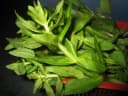
Plantaginaceae FAMILY Least Concern
Limnophila aromatica
Limnophila aromatica
Edibility
3/5
Medicinal
2/5
Safety & Hazards
None known
Cultivation Details
HabitAnnual/Perennial
Growth—
Plants are polymorphic, varying in shape and habit depending on the degree of immersion in water[1].
Propagation
Seed - should be kept dry in storage[1]. Surface sow on moist sand at 25c and cover with glass. Keep moist in a sunny position, prick seedlings out into a sand/loam mix and, once established, gradually raise the water level[1]. Cuttings. The stems often form basal roots, and these can be used as propagation material[2]. Cite as: Tropical Plants Database, Ken Fern. tropical.theferns.info. 2026-02-20. <tropical.theferns.info/viewtropical.php?id=Limnophila+aromatica>
Pollinators
Data unavailable
References
- [1]The New RHS Dictionary of Gardening. 1992. — Huxley. A. · MacMillan Press · 1992 · ISBN 0-333-47494-5 ↩︎Excellent and very comprehensive, though it contains a number of silly mistakes. Readable yet also very detailed.
- [2]Plant Resources of Southeast Asia — http://proseanet.org/ ↩︎Lots of information on the uses of the plants of SE Asia.
- [3]IUCN Red List of Threatened Species — http://www.iucnredlist.org/ ↩︎A list of plants under threat and facing possible extinction, usually with brief details of the threats and information on habitat.
- [4]Flora of China — Missouri Botanical Garden Press; St. Louis. · 1994 · http://flora.huh.harvard.edu/china/ ↩︎An excellent, comprehensive resource in 25 volumes. In addition to the botanical information the flora also gives basic information on habitat and some uses. An on-line version is also available.
- [5]Cornucopia II — Facciola. S. · Kampong Publications, California. · 1998 · ISBN 0-9628087-2-5 ↩︎The second edition of an excellent guide to the edible uses of plants, though it does not give any details of cultivation etc.